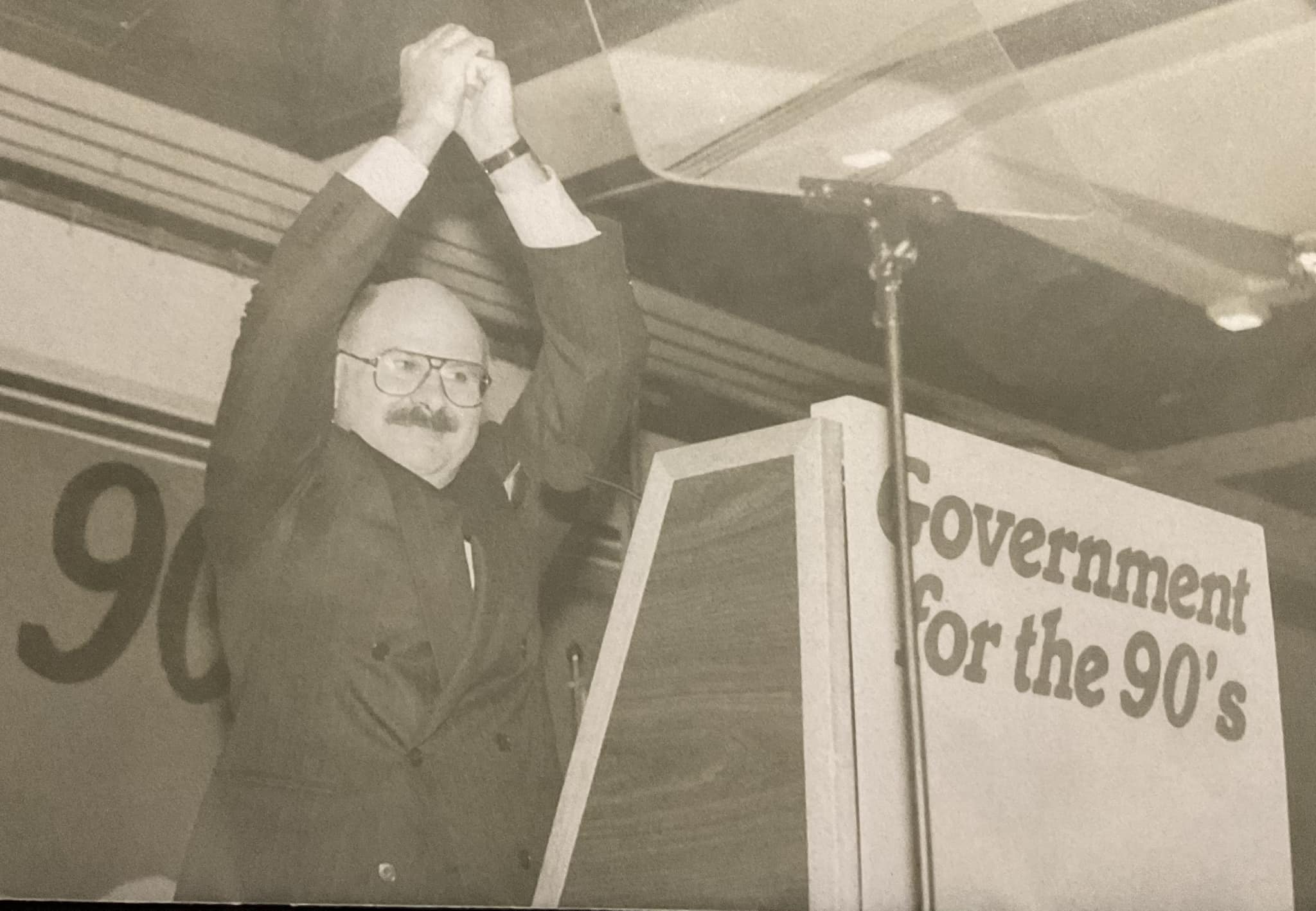
The Backstory Timeline: Labour and Politics 1961-1991
Published: December 2, 2025
Authors: Natasha Fairweather and Ron Johnson
This timeline condenses the events described by Colin Gabelmann and Ron Johnson in their discussion The Backstory: Labour and Politics 1961-1991.
Gabelmann and Johnson are both retired staffers from the BC Fed, and Gabelmann was an MLA and, later, Attorney General in the Harcourt government. In their discussion, they chronicle the relationship between the labour movement and the New Democratic Party leadership from the party’s inception to what they describe as the realization of its ideals.
CCF Reduced to 8 Seats in Federal Election
Cooperative Commonwealth Federation nearly wiped out federally, winning only 8 seats (4 in BC). Canadian Labour Congress invites the CCF to help form a new, broader-based party; CCF agrees. Three years of discussions follow.
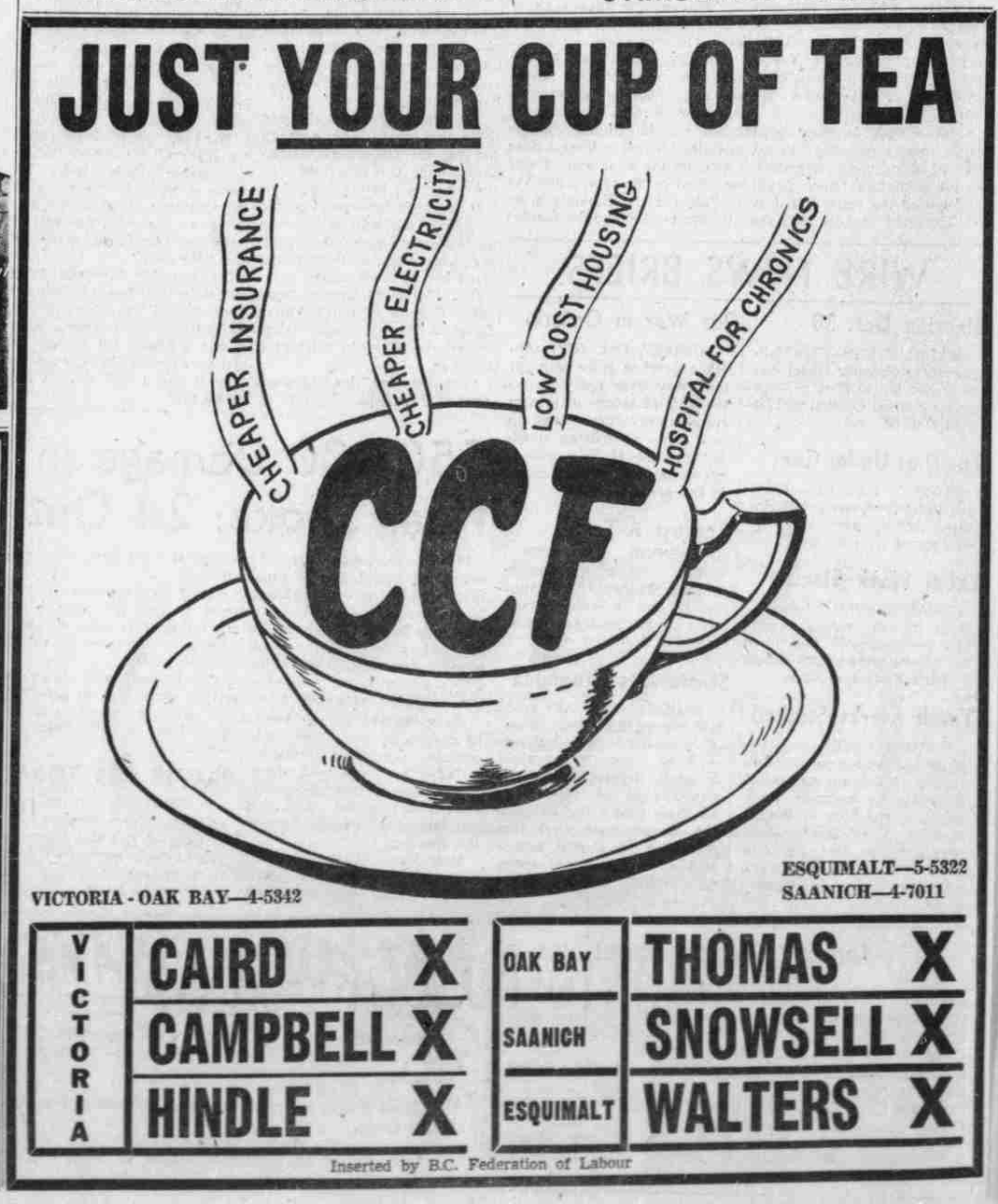
Provincial Election: Socreds Win
Despite close cooperation between the BC CCF and BC Federation of Labour, Social Credit wins another provincial election; W.A.C. Bennett, first elected in 1952, remains premier.
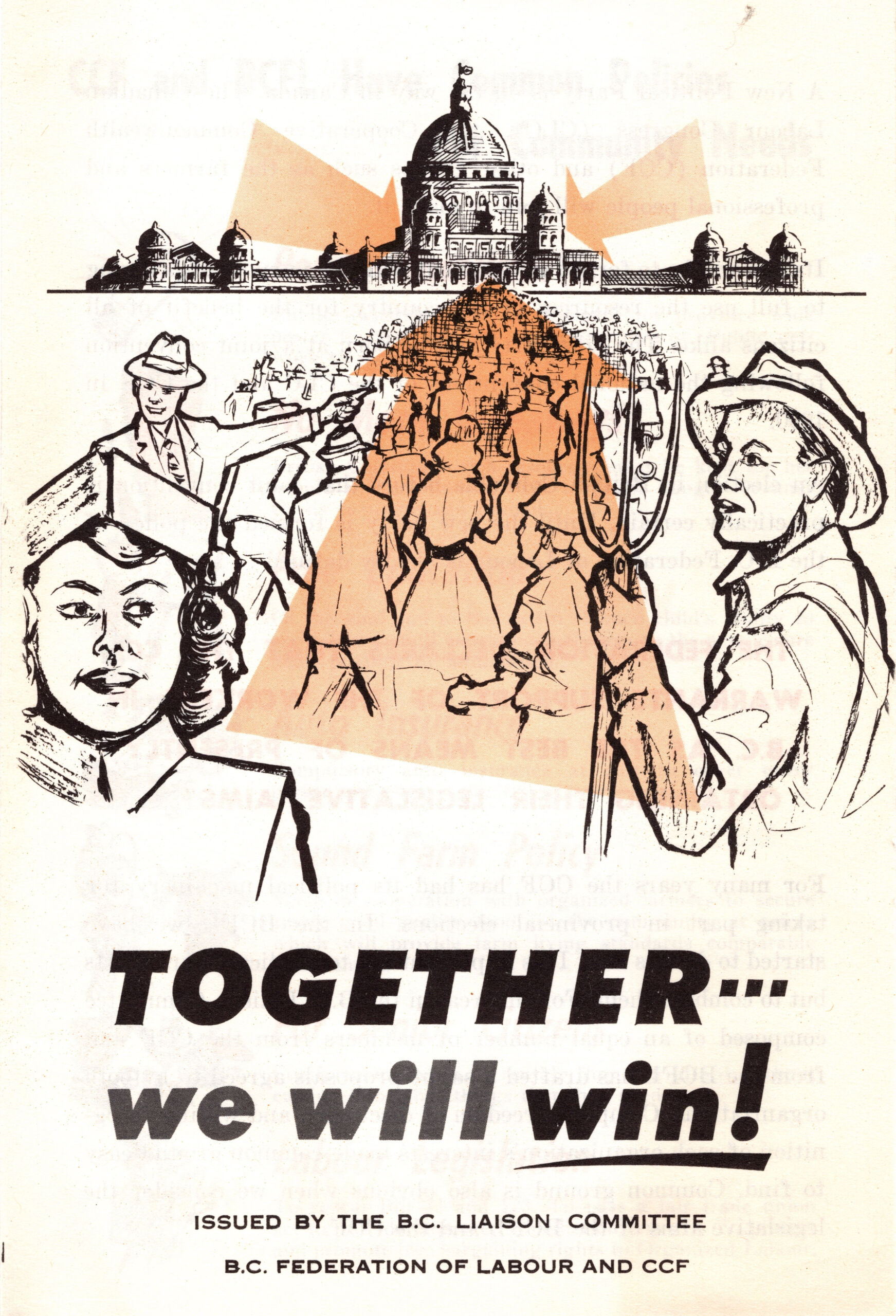
NDP Founded
The New Democratic Party is founded at a national convention in Ottawa, with direct union affiliation and formal labour participation.
BC NDP Founded
Vancouver convention called to found the BC NDP. Premier W.A.C. Bennett recalls the legislature on the same date to prevent CCF MLAs from attending. BC NDP founded regardless. CCF leader Bob Strachan becomes the first BC NDP leader.
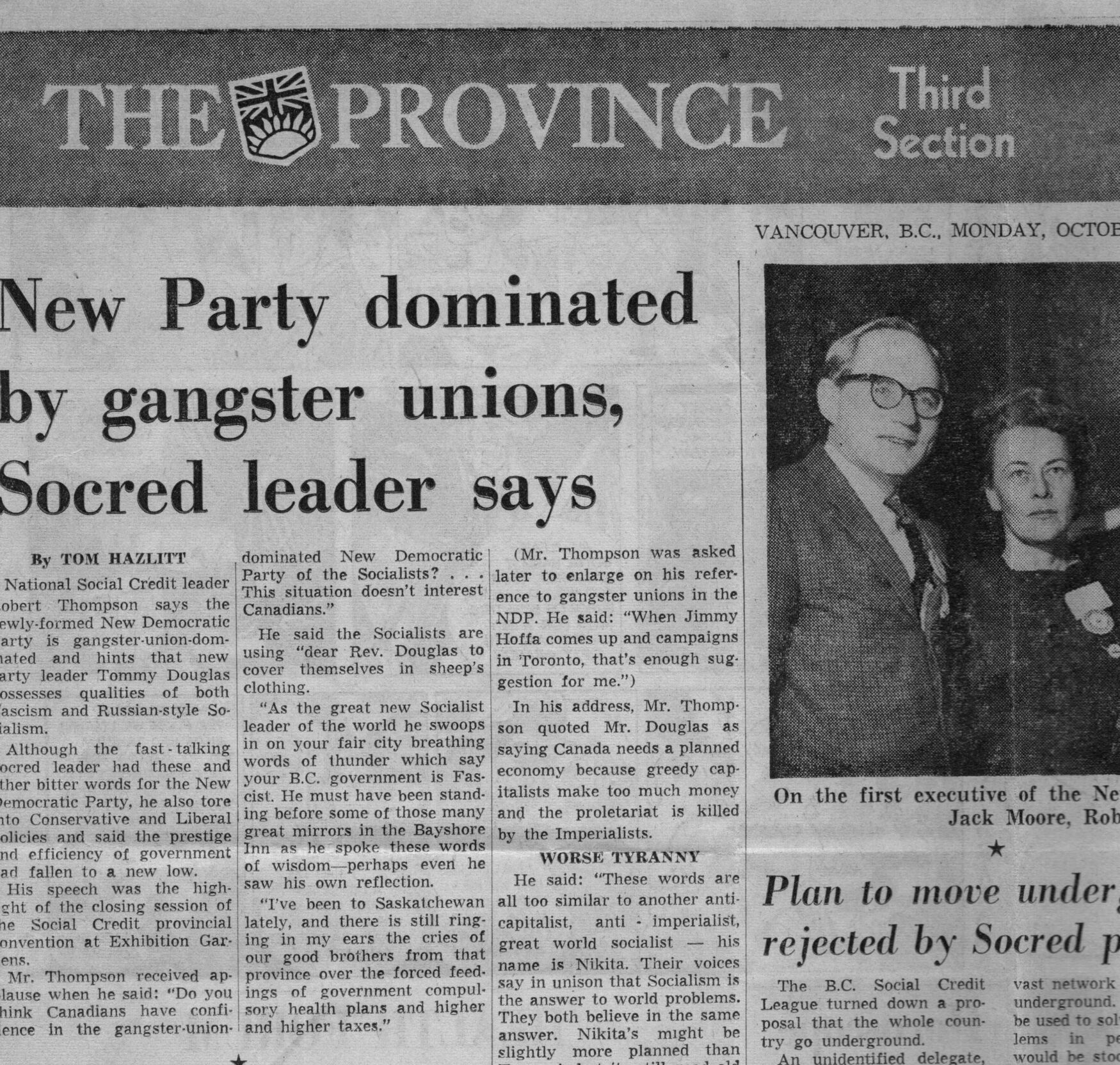
Fearmongering Against the New Party
In a sustained media attack, Social Credit portray the new party as “dominated by gangster unions.”
More Losses for the NDP
Social Credit wins the next two provincial elections; 1963 and 1966. W.A.C. Bennett remains premier.
Internal Politics
Leadership race to replace Bob Strachan sees Tom Berger, backed strongly by labour, narrowly defeat Dave Barrett. Internal tensions become known as the “Berger/Barrett split.”
Snap Election
In a snap provincial election, the NDP suffers a major defeat to the Social Credit Party. Berger loses his own seat and resigns shortly after.
Strategic Distance
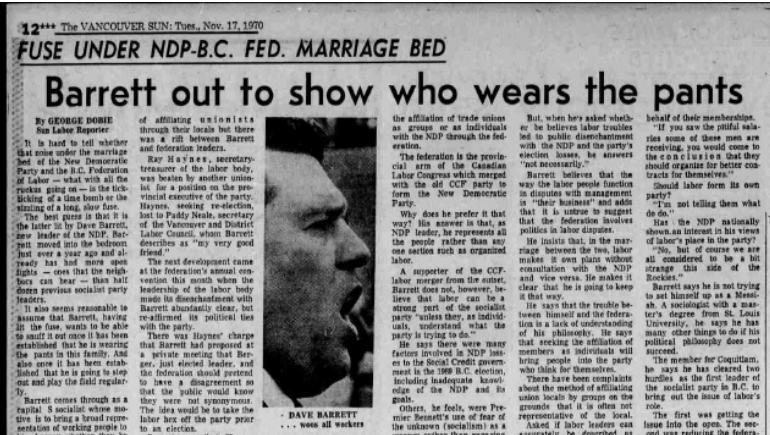
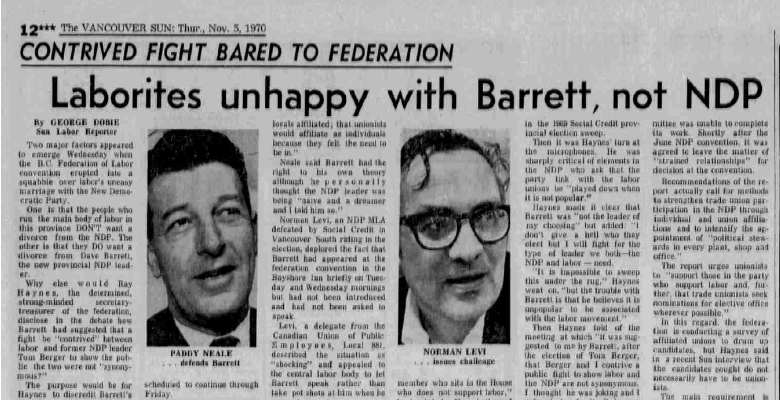
Dave Barrett elected NDP leader. Begins distancing the party from labour to inoculate against inflammatory Social Credit messaging.
NDP-Labour Split?
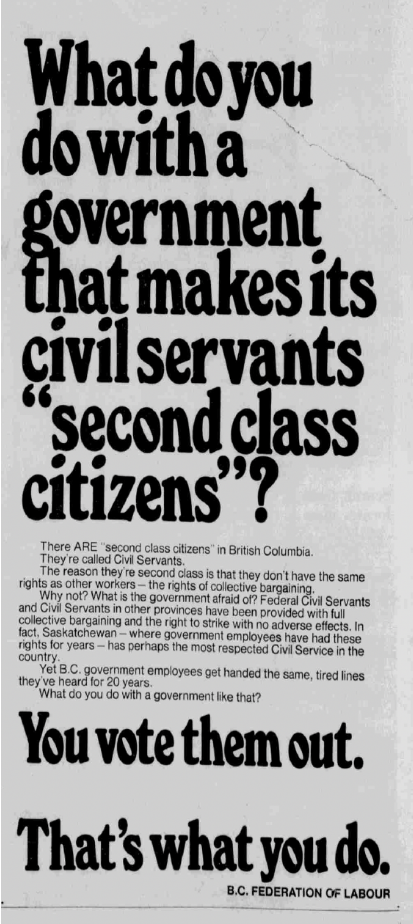
Despite media focus on an “NDP–labour split,” unions continue supporting the party. NDP platform includes a commitment to the right to informational picketing..
NDP Majority Win
Provincial election called. W.A.C. Bennett warns that “the socialist hordes are at the gate.” With strong labour backing, the NDP wins a majority; Dave Barrett becomes premier.
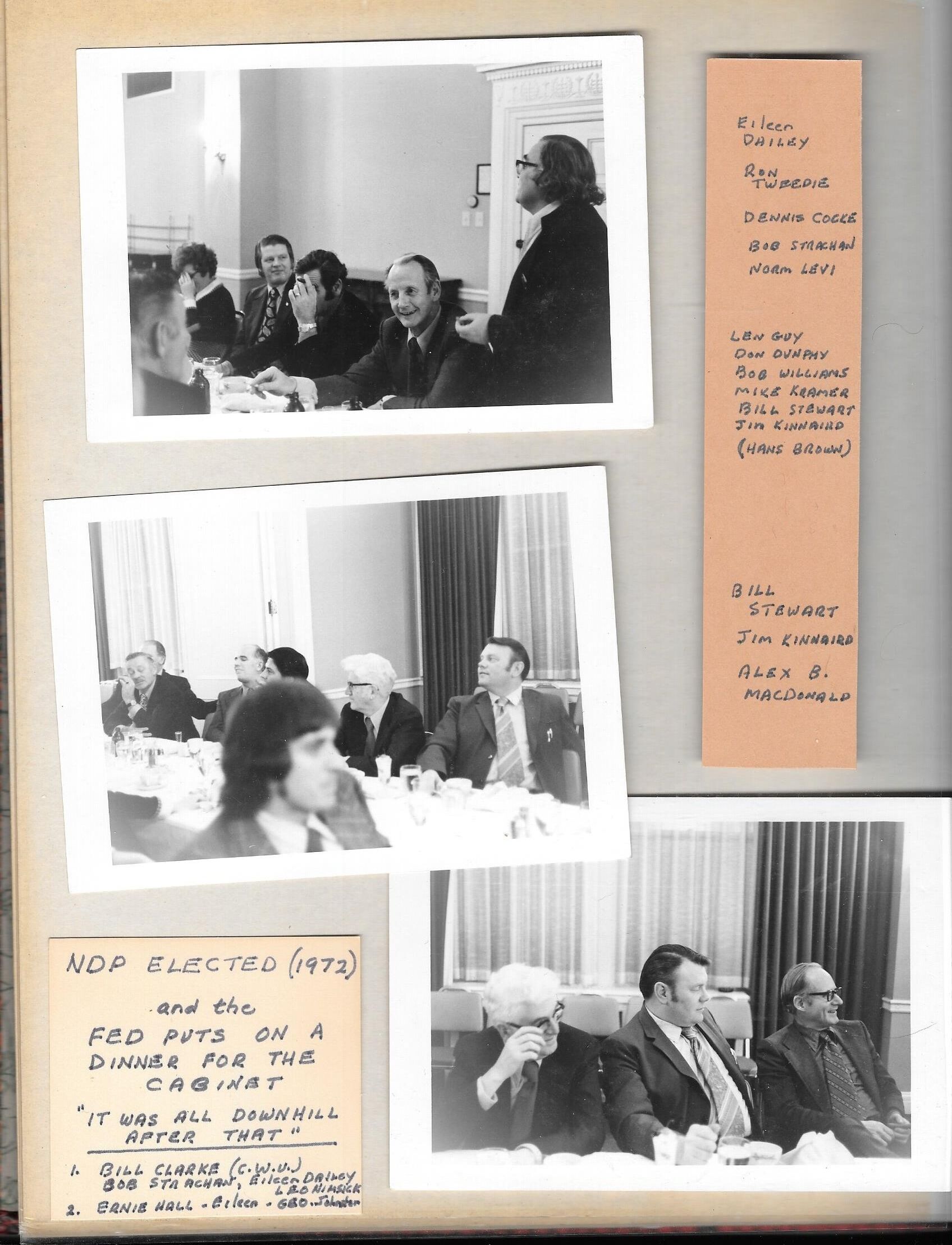
"NDP Elected and the FED puts on a dinner for the cabinet. It was all downhill after that." | Ray Haynes photo, BCLHC Ray Haynes Collection
New Labour Code
Many highly successful initiatives: creation of ICBC, Agricultural Land Reserve, provincial ambulance service, community colleges, others.
New Labour Code introduced. Innovations include banning injunctions in labour disputes. It does not permit informational picketing; instead it introduces a process for first-contract arbitration through the Labour Relations Board. Controversial among unions. Three NDP MLAs vote against the relevant sections.
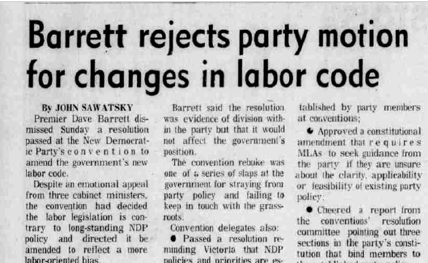
Back-to-Work Legislation
NDP government introduces Bill 146 to end strikes by several unions. Three NDP MLAs vote against parts of the bill.
Socred Revival
Premier Barrett calls a snap election; NDP loses to Social Credit. Bill Bennett (son of W.A.C. Bennett) becomes premier.
Looking Inward
Broad consensus emerges that labour–NDP relations need repair. After two more unsuccessful campaigns (1979, 1983), Dave Barrett steps down as leader.
Skelly leads NDP
Bob Skelly elected NDP leader after a difficult three-way race that revives the old “Berger/Barrett” divisions.
Social Credit Wins Again
Bill Bennett’s unpopular austerity measures bring him down as Social Credit leader. Bill Vander Zalm wins the leadership, and the 1986 election. Skelly resigns.
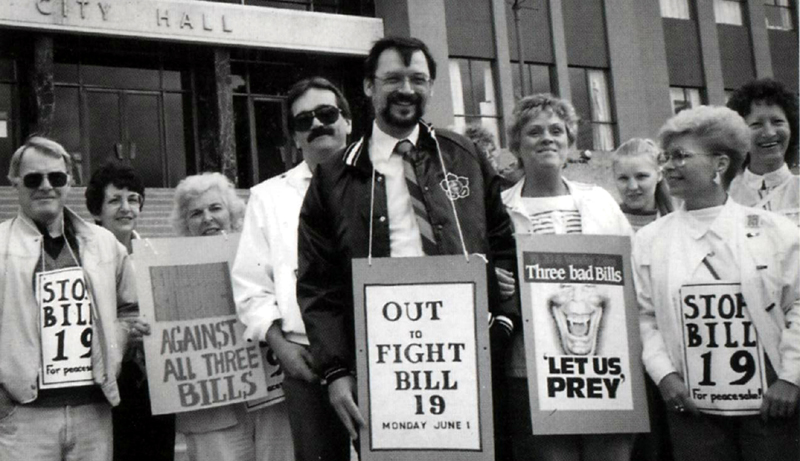
CUPE members protest "Three Bad Bills:" Bill 19, 20, and Bill Bennett.
Harcourt Leads NDP
Mike Harcourt elected NDP leader with support across party factions and a long history of working with labour.
Pro-Labour Politics
NDP wins provincial election; Mike Harcourt becomes premier. Reforms to the labour code ban strikebreaking and implement other pro-labour changes.