
David Rice Interview: Inside the Labour Movement’s Back Rooms
David Rice spent over three decades at the heart of the BC labour movement: as a government researcher, unofficial chief of staff at the BC Federation of Labour, and BC Regional Director for the Canadian Labour Congress. His career placed him at the centre of some of the most consequential moments in BC labour history, from the certification of the BCGEU to Operation Solidarity. He also transformed the Canadian Labour Congress’ Winter School at Harrison Hot Springs into a flagship institution for union education, introducing anti-harassment policies and building leadership across a generation of activists.
This interview was conducted by Rod Mickleburgh on July 5, 2025 in Courtenay, BC. It is part of our Oral History Collection.
Interview: David Rice (DR)
Interviewer: Rod Mickleburgh (RM)
Date: July 5, 2025
Location: Courtenay, B.C.
Transcription: Kevin Chung, Natasha Fairweather
RM [00:00:04] So here we are with brother David Rice, a long-time worker for the CLC out here. And so David, long-time worker.
DR [00:00:14] Yes, long time.
RM [00:00:15] Yeah, so let’s go right back to the beginning, your background, where you were born, your early days, and how you got involved in the union movement, that sort of stuff.
DR [00:00:23] I was born in North Vancouver. My dad’s family emigrated from England after the First World War and got to Port Alberni and he spent a couple of years in the mill there as a 13-year old, I think, or 14-year old and my grandmother wanted to get back to England and they got as far as North Vancouver. We ended up there for a while, we moved up to the interior, we went to England, lived in England for about four years in Manchester, came back here, and I ended up finishing my schooling in Salmon Arm and going to Simon Fraser. And I got—
RM [00:01:18] What year was that? What year when you went to SFU?
DR [00:01:21] My student number is 67-1, so I was not quite a charter student.
RM [00:01:28] You and Alan Garr.
DR [00:01:30] Yes, yes, I knew, I met Alan there, I didn’t re—
RM [00:01:36] He was one of those charter or whatever the phrase is.
DR [00:01:41] You had to be a 65-3 to be—matter of fact my number was 67-100-743-2. This is one of those numbers that’s just sort of ingrained in my head. And I got involved in the formation of the Teaching Support Staff Union [TSSU].
RM [00:02:00] What do you take at SFU?
DR [00:02:02] I got a master’s degree in economics and I was, I think I was working on it at that time, and the amusement is at the beginning of the time my senior supervisor was Herb Grubel who became a very right-wing—
RM [00:02:25] Fraser Institute.
DR [00:02:26] Fraser Institute guy and MP from West Vancouver.
RM [00:02:30] He was a mad man.
DR [00:02:32] I actually quite, Herb and I —
RM [00:02:33] He is smart, but—
DR [00:02:34] Herb and I got along quite well, actually, but he wanted me to do some writing on unemployment insurance-induced unemployment, and I thought it was bullshit, and so he decided I should find another supervisor, so that was fine, I did. But that was sort of a minor involvement. But in between, I spent some time working at Harmac, the pulp mill in Nanaimo. My first year there, it was Pulp-Sulfite [International Brotherhood of Pulp, Sulphite and Paper Mill Workers] who were in. And there was a lot of raiding activity going on. The second summer I went back, the PPWC [then, Pulp Paper and Woodworkers of Canada] Local 8 was there. I used to go to all the union meetings. I wasn’t involved, but I’d go to the union meeting. And then we went back to school. It was in the middle of a strike, actually. I mean I had already planned to go back for September and the strike started at the first of August, I think.
RM [00:03:32] Is that a strike by the students and professors?
DR [00:03:35] No, sorry, this was a strike by the PPWC.
RM [00:03:39] Oh, yes, okay.
DR [00:03:40] It was sort of in between there, and there’s some things about the timing here, Rod, that’s a bit hazy. It’s the mind getting a bit—but I ended up, I didn’t complete my master’s degree right away, and I got a job with the Ministry of Labour as a researcher in 1974, I guess.
RM [00:04:04] Under the Barrett government.
DR [00:04:05] Under the Barrett government, and I started in April sometime and was, after about being there for about three months or so, the Labour Board certified the union. I had been hired while I think the application or certification was in.
RM [00:04:30] Is this the teacher’s support?
DR [00:04:32] No, I’m sorry. I’m confused. This is the GEU, going to work—
RM [00:04:38] Can we just go back? You said you were organizing it or is that a—
DR [00:04:41] I was a member. I had no real activity there, Rod, it was a member but I was always, part of the stuff I took was labour economics and industrial relations so I was always interested in it and from a worker’s side of things.
RM [00:04:58] And I want to go back a bit, like, your family’s really moved around. Was your father a worker just going from job to job, or what happened there?
DR [00:05:07] Um… Unemployment. Dad had, let me just try and figure how I’d want to say this. Dad was an outdoors guy and he met my mom during the war and they got married in ’45. And it took over a year or so after the war before she got out here. But in the meantime, he as a newly married guy, got a job with the Unemployment Insurance Commission. He’d been working during the Depression, doing whatever, cutting firewood, shakes. He did some work up-coast with mining companies like cutting timbers and stuff like that, that I really don’t know a lot about other than the fact he did it. And he hated the unemployment insurance, hated the indoors part of it and Dad was like me is pretty tall and whenever they had a dispute going at the front office they’d get him to come up to, and he was a pretty mild sort of guy, so he’d try and cajole ’em but the fact he was six foot five and that sort of helped I guess a bit. But he hated it so he wanted to get something else so they bought a fishing camp on the Shuswap Lake and unfortunately it was about three miles past where the power went to and we went broke at it and ended up saying well let’s give England a try because that’s where Mum was from. She’s Scottish, but she was—
RM [00:06:58] Was she a war bride? Was your dad in the army and stuff like that?
DR [00:07:01] Yes, Dad was a member of the Forestry Corps, and he was in Belgium and the Ardennes. They were always behind the front lines, but they were always armed because the front lines weren’t very far away. He met Mum in Scotland. She and her sister had been sent there from Manchester because the shit was getting bombed out of it. He met her at a dance up there and one thing led to another. Three months later, they got married. So we moved back to England, did fairly successful, had a small shop there, newsagent shop. But hated Manchester, and just everything that it was at that time. So we moved back to Canada, again went back to Eagle Bay on the Shuswap for a year. Completed, I completed my schooling there. Dad moved to the island, thought he could get work, but he was in his 50s, and he ended up, after a bunch of odd jobs, with the Commissionaires working on security. Like when they built the pulp mill at Gold River, he worked up there on security and that. But it was a, I wouldn’t say it’s a hand-to-mouth existence, but you know, they didn’t have a lot of—
RM [00:08:32] He wasn’t rolling in dough?
DR [00:08:33] Oh pfft. No a long, long ways from it, so. But that was my background, but I was always pushed to continue my education.
RM [00:08:45] Does that have anything to do with getting involved in the union or do you just come to it by yourself?
DR [00:08:51] Um, my grandfather was a member of the old Liberal Party going way back, and was a bit of a fixer in North Vancouver, and he, at a time when there weren’t a lot of jobs, he told Dad he could get him into the special, I think it was special constables at that time. But they were known for cracking heads and strikes, and Dad refused. So he just said, I’m not interested in that, I’d rather stay unemployed. So that was the sort of what I got really from him. And Mum was always a labour supporter in England. So I come by a lot of—
RM [00:09:37] Manchester, what do you expect?
DR [00:09:39] Yes, I could, precisely. So that was sort of my family background. My uncle was an engineer who had been a machinist and he didn’t have an engineering degree but he went from being a machinist to an engineer. But he was blackballed earlier in the ’30s for union organizing. So there’s some of that in the background of the family and I always felt that that was the way that one had to go, and certainly when I ended up in university, I was way more interested in—I wasn’t interested in going and working for a corporation somewhere, that just wasn’t going to happen.
RM [00:10:20] It was the sixties too, right?
DR [00:10:22] It was the sixties too, yeah. So I ended going to work for the B.C. Government as a —Ministry of Labour as a researcher.
RM [00:10:30] So just going back to the pulp mill in Harmac, I mean, as you say, you saw the change from the Pulp-Sulfide to the PPWC. I mean were you conscious of how dramatic or significant that was or anything like that? Stan Shewaga and all these guys?
DR [00:10:48] Yeah, a bit. My very first year working there, I was a helper, a millwright’s helper, and I ended up working with Shewaga a couple of times. I thought he was a— Well, I don’t really want to say everything, but it was clear that he was more interested in organizing than in doing the work, and I ended up doing stuff. You know, the helper wasn’t supposed to actually do anything other than hand things to people, but that was the nature. So I was aware that it was a big shift and I was aware of all the stories about Pat O’Neill showing up in a Cadillac on the picket line and those sort of stories of corruption and John [Joe] Tonelli in New York and…
RM [00:11:38] Tonelli was the real, oh my god, what a thug he was.
DR [00:11:41] Yeah, so I was aware of those and that certainly coloured it, although that view changed a little bit over time.
RM [00:11:52] I understand that but what was it like working in the Ministry of Labour there under the NDP and Bill King and I mean that was, they did amazing things.
DR [00:11:59] I really enjoyed it. I was in the research branch of the Ministry of Labour and we put out the Labour Research Bulletin and I was the editor of it. At the time, it was really mainframe computer stuff. There were no personal computers or anything like that. And we had the wage settlement program. And it meant that we were getting calls from both unions and management about what the latest trends were and could we have information on such and such. And of course the ministry had—the NDP had brought in the requirement that you had to file collective agreements and that sort of stuff. So tha—
RM [00:12:50] I’d forgotten about that. That was a big thing.
DR [00:12:51] It was a big thing because now things weren’t in secret, you know. Now you knew what was going on over there, or at least—look, not everybody filed them, but we would try to get them filed. I ended up working, getting attached to the Labour and Justice Committee that was looking at the legislation around farm workers. And I traveled the province with the committee. And that was a real eye-opener, because it was Bill King, Emery Barnes, Jerry the MLA from Kamloops, nice guy. You know, I can’t remember his last name. D. Ed Smith, ‘Ded’ Smith from, who actually wasn’t that bad. David Anderson, who we continually joked was off somewhere at a Liberal meeting in a phone booth.
RM [00:13:51] [unclear]
DR [00:13:54] And Bill. And I’m trying to remember who else may have been on it. There was me as the researcher, and there was a woman from the newly created Hansard along, and we were the two publishers. But all the time it was, let’s go for dinner, come on up for a drink, you know, and everyone got together. So I got to actually chat with these people all the time and it was really—
RM [00:14:18] You’re just a young guy.
DR [00:14:19] Yeah, yeah, relatively, yeah so—
RM [00:14:22] What was Bill King like?
DR [00:14:24] Yeah great. He was easy to talk to. You got to know him a bit when you’re traveling around like that. I remember walking down, we had a hearing in Vernon, and Bill and I and Emery Barnes are walking down the street and you get these people looking around at us. I remember Emery saying, ‘Yeah, they just think there’s a fucking basketball team in town (laughter).’ Oh, and Frank Richter, that’s right, Frank Richter.
RM [00:14:57] Oh my god, out of Penticton.
DR [00:14:57] And that was the biggest surprise. He is the— oh and Rosemary Brown, how could I forget Rosemary. But Frank was the nicest guy. He just completely changed my opinion of some of the old Socreds. He was just a gentleman, he was pleasant, he wasn’t ideological, he was a rancher from the interior. And he would kid with Rosemary all the time going on there. It was really quite enjoyable. So I got to know a lot of these people that way and I very quickly got myself elected to the first local executive for, it was local 701 of the GEU at that time, but I was the only, I was—
RM [00:15:47] Because you were a government employee.
DR [00:15:49] I was a government employee and we, I actually, the humorous part for me was my position at the ministry in the research branch replaced Bob Plecas and Bob had gone to, I think he ran the LIT program grants or something for the province at that point and, but it was really, as one of the local members and then I very fairly quickly got on the component executive, I was seen as the ranking union guy in the ministry of labour and Frank Rhodes who of course went on to being, was the assistant deputy. Frank was a really pragmatic sort of guy and he’d call me over to his office periodically to discuss things. I always remember one of the other directors that was in there and I remember sitting with Frank and saying, ‘He’s a fucking asshole, that guy, you know, like, you can’t go by what he’s saying. Our person, da-da-da.’ You know, so even though I wasn’t actually the rep for that person, it was seen as sort of the overall, and Frank was really pragmatic about it, so it was a really nice working environment in there, frankly. You felt relevant. You got called over to the minister’s office sometimes. I didn’t particularly like Jim Matkin a lot.
RM [00:17:07] You’re allowed to say that.
DR [00:17:09] Yeah I’m not the only one in that regard.
RM [00:17:17] So you were there in really the ground floor of this earth-shaking government and what they did for labour and so on. You were right there. You didn’t realize it at the time, but I guess looking back.
DR [00:17:29] Oh yeah, looking back, I sort of realized at the time, because I realized, you know, it’s obviously a pretty ground-shaking that the GEU was certified. New legislation, I mean, the union had been in existence before then, but they were now the legitimate bargaining—
RM [00:17:44] We could just background that a bit because under the Social Credit government they weren’t allowed to be a union. And so the NDP brought in legislation saying, getting rid of that, but they had still had to organize their people and be certified.
DR [00:17:59] Yep, yep, yep.
RM [00:18:01] Were you part of that campaign?
DR [00:18:02] No, I was hired, as I say, after the application for certification went in.
RM [00:18:08] And they hired you as what?
DR [00:18:10] Research Officer 2.
RM [00:18:13] How did they know about you? Because you’ve gone to union meetings or you’d stood out, or?
DR [00:18:15] No, it had nothing to do with that. I mean, I had most of my master’s degree in economics and they were looking for somebody to fill Plecas’s position as a public service position, as a research officer, and I had, let’s say, almost two degrees in economics.
RM [00:18:36] I was wondering about getting hired by the BCGEU.
DR [00:18:41] I was elected. I wasn’t hired by the—I never worked for the GEU I was I was an elected officer of Component 7. I became a secretary-treasurer of Component 7. Component 7 was bargained away while I was still there. That’s what happens, the classifications get moved around to different ministries or or whatever, and we were broken up basically into three components, and I went to Component 6, which was social workers. John Shields was the chair of the component at that time, and we, I ended up doing the bargaining for the component members who were going with other components. Like I think at that time some of our people were going to education resear— I just remember the—so I sat at the bargaining table with them on representing our members and then also with Component 6 representing ours and I had a bit of a reputation as a secretary treasurer at that time so I very quickly became the secretary treasurer of Component 6 with Shields as the president. And that’s where I was when I got hired by the BCFed. I had—
RM [00:20:12] Can I ask you one more question about that. So, I mean, that was a landmark for the BCGEU. Did you come in touch with John Fryer at all? Any thoughts about brother Fryer?
DR [00:20:24] Oh, he is a fucking asshole.
RM [00:20:26] No, surely not. What didn’t you like about him? Arrogant and [unsure]?
DR [00:20:35] Well there was—a backstabber, in my opinion. And it was a bit of a personal thing too because I happened to be dating a GEU rep at the time and I have to figure out how to put this, John thought that was a waste of a rep. They should be associating with somebody outside the union so that they could get more knowledge about what’s going on. Shortly there afterwards, I met, actually it was my first year on the Fed staff, I met Jane, who I subsequently, we subsequently married. Jane was on the, Jane Rice, she was Jane Fisher when we got married. Jane was, became the chair of Component 6 after John Shields, and Fryer constantly put her in the can because I was working at the Fed and he didn’t agree what was going on at the Fed and obviously she was a pipeline to the Fed, and so was Shields, and so he was just a fucking manipulator and I didn’t like it.
RM [00:22:00] So who hired you at the Fed, was that under Len Guy or?
DR [00:22:04] No, no, Jim Kinnaird. It was the first year that the Fed had passed a constitutional resolution to create a full-time presidency. So they’d gone and Len stepped down. I mean, it was a massive split over the NDP stuff at that time.
RM [00:22:25] Do you want to say anything about that? I mean it was a it was fed divided with the fact it was Fryer and Munro and the Steelworkers that led the campaign against the Len Guy. Supported the trade union position and being more independent of the NDP because They had really opposed the back-to-work legislation and the labour code and so on but that convention I don’t know whether you were at that convention?
DR [00:22:48] Yes. Oh, yeah.
RM [00:22:49] It was the most bitter convention that I can remember, I mean.
DR [00:22:56] Yeah, I have a really strong memory of one thing at that convention, the election was on Friday morning. They moved it to Thursday, somewhat after that, but there were some people who are well known.
RM [00:23:12] This was in 1976, by the way, this convention I think.
DR [00:23:18] ’78, ’78 I think.
RM [00:23:20] Well, ’78 was when Kinnaird got—
DR [00:23:24] ’78 was what—oh, I’m sorry. Yes.
RM [00:23:25] The split was in 1976 when Len Guy won, but it was right after the defeat of the NDP, so a lot of elements blame Len Guy and so on for the defeat of the NDP. So that’s the background. Okay, what do you remember?
DR [00:23:38] Yeah, exactly that. I mean, look, I was well ensconced in the GEU-IWA end of things. I was an activist at the Victoria Labour Council. I was seen as the GEUs mouth on the floor. John Shields was the president, but I was the guy who was up fighting with people and scrapping. And that was very clear.
RM [00:24:04] You mentioned the election too.
DR [00:24:05] Yeah, I was thinking, sorry, you reminded me, I was thinking of the next election actually that happened there, but when Kinnaird was actually elected. No, I, I was just a component officer. I was sort of, I was involved from the GEU end of it, but not in any major way. I was a minor player in the GEU at that time.
RM [00:24:31] Do you remember that convention? Cause it was really memorable.
DR [00:24:34] Oh yeah, I remember Gerry Stoney calling for the, ‘I want a roll call,’ and two days later we actually got it finished, but it highlighted that UFAWU local with two members votes, oh I see, and our local with 750 members gets the same vote, oh to hell with this. It was it was all a fight over the affiliation, the representation, what you got for your dues.
RM [00:25:08] I as a young labour reporter, I remember that convention so well. So then in ’78, then, Guy, as you say, Len Guy stepped down and Jim Kinnaird ran, he also ran against the left, and Frank Kennedy, I think. Did Kinnaird beat Kennedy, or was that another?
DR [00:25:24] That was another, it was Bob Donnelly.
RM [00:25:27] That’s it. So Kinnaird won, and Kinnaird hired you?
DR [00:25:33] Yes and let’s go to the election, Jim’s election on the Friday. Donnelly was a known poker player and the story on the floor was that the game was going to all hours and the election got delayed a bit in the morning and it was all said this because Donnell, they had to get Donnell cleaned up and on the floor. But the GEU, early on in the— Like the opening caucus that we had on Sunday night, assigned speakers for different resolutions. And one of the resolutions that had come from my component had to do with putting clauses respecting gay rights into the collective agreement. To great laughter in the caucus, I got assigned that job. So I put this together and it hadn’t come up, hadn’t come up. Fucking Friday morning, what do they put on the floor? They put this one on. And I remember going up to the mic at the front, the cameras were all there for the election, turnaround on me, and I’m going, ‘Hi mum.’ And so I give my speech and (I am fairly sure it was Building Trades, but it really doesn’t matter) down the aisle a bit and you could hear ‘Sit down you fucking faggot!’ You know and all that going on at the time. So that was my memory of that convention, you know pretty strongly and I think on—
RM [00:27:07] Pretty progressive pretty early for that kind of a resolution.
DR [00:27:10] Oh, yeah. Yeah, it wasn’t—
RM [00:27:12] I’m not saying it wasn’t needed, but I mean—
DR [00:27:14] It was needed. I didn’t have any great problems other than I knew what I was going to get heckled.
RM [00:27:24] The other side of the labour movement.
DR [00:27:26] Yeah, yeah, and that was that was fairly clear. But Kinnaird got elected on Friday. On Monday, Ron Johnson and Johanna den Hertog resigned because they had been working for the other side. If they hadn’t resigned, Kinnaird would have fired them on Tuesday. And he phoned me on Tuesday and I met with him on, had lunch with him, on Wednesday. I had actually done some research work for Jim when he was an associate deputy minister with the Ministry of Labour on housing stuff. He knew I was a union activist and on the labour council. So, he called me and asked me to—if I’d come to work for him, I said ‘You bet.’ And I just remember towards the end of it Frank Rhodes walked in to the restaurant and walked over hi. Two o’clock Frank says ‘Hey come up to my office.’ He says ‘I know what this is about’ so we had a long chat. He was happy that he had somebody from the ministry going to work for the labour movement because it meant he had some honest feedback coming to them and all of that. And I got hired officially about a month later, or three weeks later, just after.
RM [00:28:49] What was your official title?
DR [00:28:51] Director of Research and Legislation.
RM [00:28:53] And so what was it like working for Jim Kinnaird?
DR [00:28:56] Oh, I liked it. Jim was one of those guys that—You were entitled to make a mistake. Don’t make it twice. He’d give you advice if you asked for it, but he didn’t stay on top of you all the time. He let you do your own thing, as long as you’re working for the store. And that was never a complaint against me, that I wasn’t working for the store. No, Jim was great. I really enjoyed working for him. I became, I guess, unofficially the chief of staff within about a year. I think I got 20 bucks a week and a title of the Administrative Director and that became my job.
RM [00:29:42] Well those were turbulent times for labour in the early 80s and we all knew the BCTel strike and other strikes that went on and they were threatening regional general strikes. I remember that Tom Fox wrote this great speech, you know, by Kinnaird, ‘Wherever workers are on the line, the BC Federation of Labour will be there, and this is when we take you on,’ you know, and it really scared the employers, because they knew— ’cause Jim Kinnaird was kind of this mild guy, but when you pushed him, he was as hard as he was. Do you remember any of those, the turbulence of those times?
DR [00:30:25] I do. Jim was quite clear from the beginning that you had to do things for the opposition. You couldn’t just dismiss them and say, ‘We won, screw you.’ So he was, like in the Tel strike and that, we were expected to be really as helpful as we could be. And I think that was a lot of what bringing things back together was about. You. The big guys, the GEU, the IWA, a couple others help set the policy. But you had to provide services to the smaller unions, and you had to help them especially. And then if the big unions got in trouble, you had to bring things around to help them too. So it was a turbulent time, but the first two or three conventions were certainly pretty—
RM [00:31:12] Labour did well under Jim Kinnaird’s leadership, don’t you think? I really liked Jim Kinnaird, I have to say. But we got along, and I just admired him a lot. We can all speculate how he would have handled Operation Solidarity.
DR [00:31:27] It would never have happened.
RM [00:31:29] It may never have happened.
DR [00:31:31] That was Art.
RM [00:31:32] But, um, I mean, what was the impact when Kinnaird died suddenly?
DR [00:31:37] Well, I can tell you what the personal impact was. As somebody who was noted for not arriving in the office till 9:15, I was in there at seven o’clock, and I was writing a speech for him to give that night. That’s why I was in there, I had to finish it off. And Tom Fox was in there as well. And the phones just kept going off all the time, all the the time. But we had a prehistoric switchboard sort of thing. And finally a call spilled over to Tom and it was that Kinnaird was dead, and it was like ‘What?’ And so we all sat around sort of dumbfounded looking at each other and—
RM [00:32:21] Sudden heart attack.
DR [00:32:23] Yeah, I’ll leave the details out, I know them all.
RM [00:32:25] But it’s not important.
DR [00:32:26] No it’s not important, but we had to go and retrieve his car and Keith Graham and I got that job and Keith and I flipped the coin and I lost so I got to drive Jim’s car back. But my office window looked out over the parking lot and I refused to have the car in the parking to look after, so I called the GEU and asked if they’d mind if we stored it in their garage for a while until we could deal with matters, and they said yes, so. Yeah, it was really, it just blew us away, and then Jack came, Big Jack came over, and, you know, we were sitting there, sort of stunned about it all. I think Mike, yeah, Mike Kramer was the secretary-treasurer by then. MacIntyre quit to go to, I forget whether it was, he went straight to hotel labour relations, or he went somewhere else in between, But anyway, Mike took over. From him, I remember Mike telling me some time later that Jim actually wanted me to be the secretary treasurer, but Mike said ‘I got the political creds at this point.’ I mean, it was a friendly chat. I get along really well with Mike all the time too, even though he had some severe alcohol issues.
RM [00:33:45] Yeah, he did. So how did that affect your employment, or how does that work?
DR [00:33:53] Uh, well—
RM [00:33:54] How did you end up going to the CLC?
DR [00:34:01] Art got elected, Art Kube, to replace Jim. Mike was the acting president for a number of months in there and there was a lot of jockeying going on to replace him. And Art came and it was pretty clear Art was always a one-man band. And he one of the most bullheaded people I’ve ever met. He was going there, he was going there, there was no deviations, he was going there. And Mike, I remember telling me, Kramer had a discussion with Art. Art and I, I wouldn’t say we didn’t get along, we scrapped quite a bit and it was because I sometimes didn’t agree with Art’s ideas.
RM [00:34:54] This was at the time when Art had been the long-time regional BC director of the CLC.
DR [00:35:02] Yeah, and Art got sent out here because he ran against the Congress secretary-treasurer as a Congress staffer. So they figured if they sent him to B.C.—
RM [00:35:12] That was Art wasn’t it?
DR [00:35:13] Yeah it was a long ways away from Ottawa. And in those days, communication was telephone and teletype.
RM [00:35:20] Send to Coventry.
DR [00:35:20] Yeah, yeah, send him out to B.C. It became a one-man band. I remember Mike having lunch with me once, he said, ‘Look Davey, I’ve tried to tell him,’ he said that ‘With Kinnaird, Kinnaird wanted you guys to say what you thought and he wanted to hear what different points of view was, Art’s not interested in that.’ And he tried to mollify Art and that. But it was, I just thought art was a bit of a disaster as the president in a lot of ways. His replacement, Noel Stoodley, was only there for a while, Stoodley was a bureaucrat. I was responsible for education with the Fed, I’m trying to deal with them, I try to get them around to a B.C. point of view, but that never did happen. And he went to become the National Director of Education. And it opened the job up. And I went and had a chat with Jack Munro, who was the Congress officer in the area. And Jack anointed me as the person, and Dennis hired me. I was Dennis McDermott’s last hire at the Congress.
RM [00:36:43] Oh really?
DR [00:36:43] Yes.
RM [00:36:45] Anything you want to say about Dennis McDermott?
DR [00:36:47] Not really, because I got hired in September of, oh god, you’re pushing me here now, of ’85.
RM [00:37:04] No, no, it must have been before Solidarity?
DR [00:37:08] No, it was after Solidarity. The other thing in here, Jane died of cancer in there. And so things— It was sort of, you know, I was at a point where, you know, I’m tired of this. To be fair, I had been I’ve been working with Gerry Stoney for the opposition, quietly trying to unseat Art and I just knew that it was time to go. I had a chat. Cliff [Andstein] was elected as the secretary-treasurer and I had a chat with Cliff afterward. Very shortly after and said ‘You know David,’ he said ‘a bunch of us went to lunch and I remember you saying that if anyone knocked off Mike you guys would get him.’ He said, ‘but you and I’ve always gotten along and you’ve never done anything to me and if you don’t, I’m good with that.’ And so Cliff and I get along quite well and I remember telling Cliff at some point before I left that you guys knocked off the wrong person here unfortunately in my opinion and so I went to the Congress and—
RM [00:38:20] Sorry, knocked off the wrong person?
DR [00:38:22] They knocked off Mike Kramer instead of—
RM [00:38:26] Yeah, he got blamed for a lot of stuff.
DR [00:38:28] Yeah, that was the election that Frank Kennedy was running in. Frank was running and Art and Joy Langan were running. And it was all about who was going to finish second, because whoever was going finish second was going to win. The expectation was Frank was going to win the first ballot, and that’s exactly what happened. And Joy finished third, Art finished second. So Art became the, everyone ended up voting for Art, or the vast majority of people did.
RM [00:38:55] Jack Munro’s saying about Art. He says (this is after Kinnaird died) ‘Art Kube was the best regional director we’ve ever had out here and he should continue to be.’ So let’s just go back a bit because Art was in charge during Operation Solidarity. Do you have any thoughts on how that evolved and did you have a role in it and how you saw it from where you were?
DR [00:39:20] Well, I was effectively chief of staff of the Federation at that time, so I had a role in it. But Art had, we had a, I’m trying to remember what the name of it was now, but the—
RM [00:39:33] Solidarity Coalition?
DR [00:39:34] Well, it was the Solidarity Coalition and the Solidary union, I’ll call it a coalition, Operation Solidarity. Art augmented the officers with a number of other people, and I was one of the people that augmented it. So I was involved in all the decisions that we made, and as a staff guy I was responsible for carrying some of them out, but it was usually a big sort of coalition of union staffers who got together, if we were organizing Empire Stadium Rally or the march around the Socred convention or things like that, so we were involved in it. So it’s all a bit of a blur though because I mean you were continually doing stuff. My job through a lot of that was handling UBC. They figured, okay, you’ve got the degrees, you can go out and deal with them, but it was all about shutting UBC down and how we could do it and that, and so I don’t how many meetings I had with the various unions out there.
RM [00:40:43] Because there were no Fed affiliates?
DR [00:40:43] Oh no, no, one of the bigger ones was AUCE at the time, and I think the building trades were outside of the Congress by that time, so there were a couple building trades unions out there as well. So I mean, I got along fine, but these were meetings that start at 7 and end at 11 at night.
RM [00:41:10] But it was an amazing movement, was it not?
DR [00:41:12] Oh yeah, yeah, it was. And it’s a bit. I was—I’ve been a bit nonplussed over the years at the shit that Jack took over it, because Jack went to Kelowna and got absolutely everything that we sent him to Kelowna to get. I was at the last meeting of that union committee that sent Jack, and I remember Roy Gautier turning to me, so I sat beside Roy and him saying, ‘You know, I’m not really happy sending Jack. But he’s the only one who’s got the credibility to go, so it has to be him.’ And that’s right. And I mean, Jack wasn’t really in favour of a lot of the stuff that was going on. Jack may have not have bargained the hardest he ever did, but the reality was he got what we figured we could get. I mean I like to draw a parallel with the convoy stuff in Ottawa. They didn’t realize what I think we realized at the time is If you dig in and call for the overthrow for the government to step down, that is an insurrection. We were calling for the government to change its ways and we were constantly making sure that we stayed on that line so that we didn’t cross over into it becoming an insurrection. And that was always a sort of a limiting factor. We just knew that if we crossed over that we’re gonna get hammered.
RM [00:42:44] Yeah, you mentioned that, I’m not sure I entirely disagree with you, that I entirely disagreed with you on everything there, but because Bennett never lived up to anything.
DR [00:42:55] Not really.
RM [00:42:56] He said what he agreed to, but he didn’t care because he could see the labour movement wanted out a bit more than he did. Anyway, but that’s neither here nor there. You mentioned that Jim Kinnaird would have handled it differently than Art. Do you want to just elaborate on that, and think Art lost his way or what do you think about that?
DR [00:43:14] No, Art just took a view of involving, all he—forming the Grand Coalition. He had a really European view of it and I don’t think Jim would have gone there. Jim would have kept it more union-oriented. I’m not quite sure where he would have gone with it to be fair. I never contemplated that one.
RM [00:43:44] He would have been tough though.
DR [00:43:45] He would have been tough, there’s no question about that. I mean we had lots of things with Art, you know, you’d end up getting assigned to go speak to somebody, you know, and you’d show up there and well, where’s Art? Well, he sent me here. Well what Art used to do is he’d get three or four speaking engagements on one evening or something, he’d take the one he wanted the best and assign the rest to the staff after he told these people that he’d be there, you know? So it was always, you’d show up at these things wondering exactly what was going to happen to you. I remember I didn’t wanna, I forget which one it was. It was the night that Art was on Front Page Challenge. And I came to realize that he’d made some promises that he wasn’t about to keep.
RM [00:44:34] Well, there was no movement like it, and it’s sad the way it ended.
DR [00:44:39] Well, it is, but Art raised the expectations in the community sector way, way, way higher than he should have. You know, one thing I learned in the labour movement is it’s a lot easier to get people to go on strike than it is to get them back to work. And you have to contemplate getting people back to work when you take them out on strike. And Art missed that point there, I think.
RM [00:45:03] Well, they were sold out at the end, but there was never made—and it to be a trade union decision. They were the people that were on the line, as Jack Munro would put out. They weren’t going on strike, but that was never explained to them by Art. So they were bitter, and I know why they were bitter. They had reason to be bitter, because Art had just used them in a sense, because they gave so much credibility to Operation Solidarity. And then at the end they were nowhere.
DR [00:45:32] Well, I’ll certainly agree with that one. I mean, it was, you know, when the GEU got their settlement, where were we going? I think Steel were getting lawsuits, IWA were getting lawsuits, Teachers, you know people were getting screwed around pretty bad. People were going, putting their jobs on the line out there. And sorry, those are the ones we’re here, we were elected or hired to represent.
RM [00:46:08] Right, exactly. What a time that was. Oh my god. Really close to a general strike.
DR [00:46:12] Oh, it was, I’d say.
RM [00:46:14] What was the mood like? Were people nervous? How did you even function? There’s no blueprint for that.
DR [00:46:21] A lot of adrenaline.
RM [00:46:23] A lot of coffee.
DR [00:46:25] Yeah—
RM [00:46:29] What was it like behind the scenes?
[00:46:29] Um chaos? I mean, you’re—
RM [00:46:33] And then Art got sick.
DR [00:46:37] Yeah, um—
RM [00:46:39] He was out of commission, that’s why Munro and Kramer took over.
DR [00:46:42] Well, yeah, Art I think had a nervous breakdown. I can’t say that for sure, but I’m pretty certain that’s why—the stress got to him. And it was at the most critical time, which weighed against Art too. You don’t lead somebody into war and then break down just as the final battle is happening. No, I don’t want to denigrate Art because Art was a great mentor for me in the education area but he should have, Jack had it right, he should’ve stayed in my opinion as the regional director even if it had sort of precluded me being it.
RM [00:47:25] Now, you succeeded, well I mentioned Noel there, but basically you succeeded Art in that job and one of the things I just wanted to, like Art Kube had a real reputation as a heavy and as a fixer at conventions, lining up the votes against the left and all this kind of stuff. I can still see him with his thin cigarette [unclear] at the back of the room looking at— Were you, I mean, did—
DR [00:47:50] Yeah, I took that role over.
RM [00:47:51] And what was that like? Describe your role. This is the regional BC director, BC Director of the CLC.
DR [00:48:03] Let’s put it this way. When I went to the Congress, Len Ruel was the other regional director. There were two of us at that time. Len and Dennis McDermott were pretty tight. Len made it pretty clear that Dennis was not interested in Art getting reelected. And so, Len and I had a dinner with Ken Georgetti and it was known that Ken had some interest and we looked at Ken as being the person out of all these that we thought could take over and run this organization and we talked to Ken about running. And then, to fast forward a bit to the CLC convention that was a few months later, the Fed convention was going to be in the fall. After Len and I had a few discussions—but I was the guy that knew everybody. I’d been seven years at the Fed. So I did a circuit around talking to Leif Hanson, ‘You going to run? Interested in running?’ ‘No.’ ‘Okay.’ Ended up putting together a meeting in my room with Munro and Stoney and Shields. I think it was Monty Alton was there from Steel, or it might have been, I’m not sure it was, Monty, actually. But anyway, there was a group of people there, and it was either Ken, Joy Langan or Cliff Andstein, and there were people lined up against Cliff. It became, after Stoney bargaining, I always remember he told Roger Stanyer, he said, ‘Stay by the phone and don’t fucking say no.’ And so Stoney as well, he just would throw Stanyer’s name out as a possibility in this meeting. And then anyway, at the end of it, the agreement was it was going to be Georgetti and Andstein. And we all went for dinner in the hotel afterwards. And I was sat looking out into the hallway and I saw Art walk by. He looked in there and he saw the people that were sat together. And the fact that John Shields was there, he knew his time was up. And John had agreed that he was the one that was going to go and tell Art. And I think Art knew what it was and he announced his resignation before John actually went and saw him. I had a fair hand in putting Ken in place and then I became the guy who ran the slate and put that together for him until he went to Ottawa.
RM [00:51:14] So that’s a side of the labour movement the public doesn’t see, right? But I mean, it’s important. I mean and you know, you have to sometimes lay on the lumber behind the scenes.
DR [00:51:25] Oh yeah, yeah, there was a little bit of that at times. It always sort of started, you know, with your team. You know, you had to make sure that you had the winning side, but you couldn’t completely rule out the other side. And you always had people on the other side that you could deal with all the time. And, yeah, Bill Zander and I, we’re somewhat—
RM [00:52:03] I love Bill Zander.
DR [00:52:03] Look, likewise. Bill and I were two guys who, we beak a little bit in a friendly way, but we could get on, even though his politics were well to the left of mine, and I think at that time, Norm McClellan had come from Alberta to be the CPU regional director. He succeeded Brian Payne, and Norm was well on the left. Too. So Norm was sort of in with—
RM [00:52:34] The CP [Communist Party]-types?
DR [00:52:36] Yeah, there and I always remember it was Len Worden had been defeated for the Building Trades and but he’s remained on the Fed Executive Council and this was a sore spot, a sore spot.
RM [00:52:54] Len Worden.
DR [00:52:55] Yeah yeah and we knew he had to go but you weren’t gonna give that up too easily, there’s a bargaining chip. And I remember in the start, Nick Warhaug, who was president of Local 40 at the time, Nick said, ‘Look, I can deal with Len, so you just tell me what you need.’ So we just kept Len in until I think it was Wednesday afternoon. We sent Nick off to have lunch with Len and tell him it wasn’t going to happen. And then after lunch, I can remember standing, Bill was in the, and Norm were actually in the visitor’s gallery, and I was saying, ‘Okay, we’ll give you—’, I forget who we gave them instead. I think it was probably whoever the new Trades president was. ‘Len won’t run.’ And I remember, well, Bill said, ‘Oh, I don’t know that, so I’m going to have to vote that.’ I said, ‘Yeah, go vote it.’ And then Bill thought for a second and said, ‘Yeah, and take all our people off the floor. We’ll get a good count then.’ You know (laughter). He came back about 20 minutes later and said ‘You’ve got a deal.’ And it was all about trying to make sure that you had enough delegates to enforce it on a vote and not all unions were really tight necessarily. Some would vote 100%, but CUPE never would. I shouldn’t say never because I remember them doing it once. But typically you could split a bit of CUPE off and that was just how you worked on that.
RM [00:54:29] They didn’t all vote for Mike Kramer, that’s for sure.
DR [00:54:32] Ooh, shit.
RM [00:54:34] Well, this is interesting because it’s, again, it’s these colourful characters and the public only sees them talking about strikes and all this kind of stuff, but behind the scenes, all these personalities come together, right?
DR [00:54:46] Oh, yeah.
RM [00:54:47] They remain personalities.
DR [00:54:48] Oh, and look, they go in a lot of different ways, too. To go back a little bit, after Solidarity there was a meeting in the Kootenays, so Kramer was dealing with it. And they wanted a tough speaker. They wanted Bill Clark, actually, is what they wanted, but Bill wasn’t available. And I forget exactly how it worked out, but in the morning, I remember going into the office and for some reason, I was wearing a brand new pair of gray shoes that I bought at the Congress convention. I actually had a suit and a tie, or a sport jacket and a tie on and Kramer says to me, ‘What are you doing tonight?’ And I said, ‘I don’t have anything planned.’ He said, ‘How would you like to go to Trail? Or, Castlegar?’ ‘Oh, okay, I think I got a toothbrush in here anyway.’.
DR [00:55:43] So I get there, and it’s a fucking muddy parking lot, and Ronnie Schmidt has picked me up at the airport and gone and fed me a burger. And he wanted somebody who was going to speak for the store. That’s what he wanted, somebody who was going speak for the store, and that’s what I was going do. And I remember walking into this place—.
RM [00:56:00] When you say the store, what do you mean?
DR [00:56:04] The Fed. Like I wasn’t going to be off, I was going to—the official line, you know. I was gonna, I might waver a little bit, but I was gonna go on and I would do it forcefully. And I remember walking into this meeting saying, ‘Fuck, this is pretty big,’ and I walk in, there’s about a thousand people in there, and I go, holy fuck, and I’m on with Bill Zander and Father Jim Roberts, and somebody else, I forget who it was, doesn’t matter, so those two, and I’m going, holy shit, and—.
RM [00:56:34] You set me up!
DR [00:56:34] Yeah, and I didn’t stop there and I’m getting ‘Boo! Hiss!’ you know, and I’m going, the hell with it, you know. So I just keep at it, and then there’s a question that’s aimed at me, another question is aimed at me, another question is aimed at me. And then this woman gets up, a younger woman, and I’d seen her having lunch with Gordie Larkin or dinner with Gordie Larkin in the same bar. So I thought, oh, okay. And she starts talking about the Squamish Five who had bombed a transmission station on Texada, I think.
RM [00:57:12] And then blew up Litton Factories [Industries].
DR [00:57:12] Yep. And that we needed some action like that. And I go, oh my God. And ‘Father Jim Roberts, I’d like to ask you—’ And I went ‘Ahh! Jim, over—’ I was sat next to him and I said ‘Jim, over to you.’ It was that sort of stuff. I was always seen as institutional. I got that from Mike Kramer. Mike actually taught me the role of a staff guy. It wasn’t to be too independent. You had to have some independence, but when it came down to it, you had to support the store.
RM [00:57:50] All right, we could be on this forever. I’ve got to bring you back on topic in a way. Well, first time, so what was [Ken] Georgetti like as president? Do you like working with Georgetti?
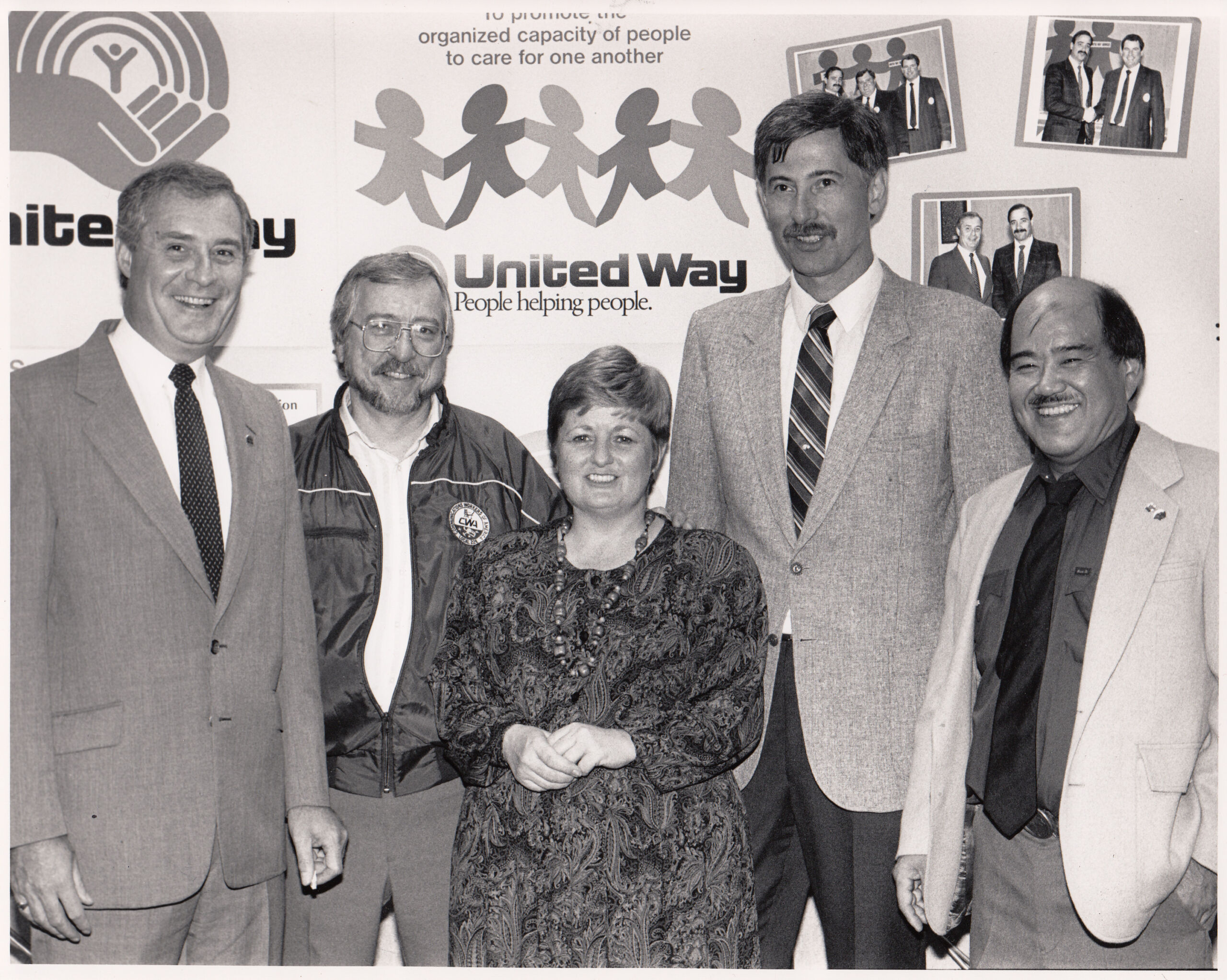
DR [00:58:00] Oh yeah, it was a lot easier. Well, I shouldn’t say that. It was easier working with Ken as the president of the Fed than it was the president of the Congress. Although it was never a problem. I mean, it’s just that Ken is Ken. And I said that after he roasted me at the United Way thing, was exactly that comment in there. I was pretty established at the Congress by then and you know I’ve sort of gotten this far and haven’t talked about the Winter School a lot but you know that was my main thing and it also put me in a position where I knew everybody because they all came through the Winter School at one time or another and it was, you’re either students or I got a lot of people, obviously, as instructors. I think I had about a hundred and—I think I averaged out about 110 instructor-weeks every year at the winter school. So I have staff people and officers from a whole bunch of different unions involved there. So, I always had a pretty good handle on what was going on and Ken appreciated that I had that, but he had his own political base there and I was part of it. I didn’t have the freedom as the regional director with him as the congress president that I had with Ken as the Fed president.
RM [00:59:34] Okay, so you’ve mentioned the Winter School, so it’s an amazing institution, so talk about what is the Winter School and what was your role? And well just talk about it.
DR [00:59:46] Well, the first thing I’ll say was that you’ve got to give Art Kube an enormous amount of credit. Art started it, Art got it going. Art also put a financial structure in place that kept it going. It was the difference as to how they handled the labour education grant money from Ottawa. Everywhere else in Canada except B.C. they fully paid for everything. The Congress put a school on and they used the grant money to pay everything for the union. Art didn’t see it that way. Art gave out scholarships and you’ve got a scholarship which paid for the room and board at the Winter School only, not lost wages, not anything more, just, just that. You got a scholarship if you sent other students. And so he dispensed the scholarships that way and so the money went a lot further in B.C. and it really allowed for the growth of the Winter School. Now the Winter School was actually started by, the original regional director was Ron Tweedy and it was held at the Island Hall in Parksville and then Art took it over and it was relatively small, about four classes I think at that time. And then the staff at the Island Hall went on strike and they had to run it somewhere else and Art got the deal at Harrison and we never left Harrison after that. When I took it over, it was not a friendly place for women, number one. We had very few women instructors and I knew that had to change. So I started working with unions, especially the GEU (obviously, it’s where I came from), CUPE, to get women instructors and to get quite a few of them. And as a matter of fact, the GEU gave me almost entirely women instructors for the first two or three years to help with my distribution there and then I started bringing in the harassment policies and again I think was the first in Canada to do that and started to enforce them.
RM [01:02:00] That’s internal union, like harassment.
DR [01:02:03] Yeah, it was sexual. It started out as sexual harassment. I mean, look, we were dealing with the atmosphere for women at the school. And so a lot of it was changing that. And also there was a perception among a lot of union leaders, it’s just one big fucking party. And I had to change that one. And a little bit of it was quietening things down, which worked on making it a bit of a safer place for women, too. And remove—
RM [01:02:30] Was there resistance to that?
DR [01:02:34] Uh, there’d be the odd individual resistance, but I can be pretty brutal if I have to be. I used to turf people out of the school. It wasn’t a lot, because after a while—although I did six in one night. You had to show some enforcement. And then we got the idea—
RM [01:02:58] Six in one night, six people thrown out?
DR [01:03:00] Yeah.
RM [01:03:01] Wow. What were they doing?
DR [01:03:04] Uncontrollable party. I don’t want to get into it. I’ll get into it a bit with you off the line as to what it was but—
RM [01:03:15] That’s pretty impressive if I may use the wrong word, but you were, you policed it.
DR [01:03:20] Oh yeah, and I remember the Labour College of Canada was going through some of these problems and that was a two-month residential school at that time. And one of the things I used to do whenever I turfed anybody was I made a call to Ken’s office and said, I have just thrown out—in this case it was six firefighters at one, just so he knew if they got a blast coming from a union officer. And it so happened the next morning was the executive council meeting and before the executive council they had the Labour College advisory meeting and the acting director at the time, we’re talking about the harassment issues and he got asked about chipping people out and said, ‘Well I couldn’t do that, the unions would get unhappy’ and I think Ken said ‘Rice just threw six people out at Harrison last night, if he did that why can’t you do it?’.
DR [01:04:18] So the reputation was there, and as I’ve said to everybody, I never ever got any serious blowback from any union for firing somebody out of there. I got usually a call from a union officer saying, what happened? I explained what happened, and they said ‘Apologize for our member’ and that. There was one guy I turfed. His officer was Don Garcia, and Don Garcia was there at the Winter School, and he wanted to talk to his representative, so he and I went over to Don, and we explained what happened, and then Don turned to his member and said, ‘You can’t fuckin’ do that. You’re out of here.’ So again, it was always, it had a lot of support for it.
RM [01:05:05] Wow, that’s interesting, I didn’t know any of that.
DR [01:05:07] Yeah, it was the union support, and again, I’d always talk to the officers too about what I was doing, so people, and I encouraged unions to put their own courses in the Winter School a lot too, so their members then became part of the school, but they could control the message that was going to their own members.
RM [01:05:27] So if you were a rank-and-file, it was open to rank-and-file union members, right?
DR [01:05:31] Yes.
RM [01:05:32] And what did they learn there? Bargaining and how to be a shop steward, that kind of thing?
DR [01:05:37] Yeah, there was all of that, but we ran a fair number of legal courses, too, and I took full charge of those because I’d been, that’s sort of my bag at the Fed and I used to represent the Fed at the Labour Board, I was appointed as a member of the Labour board, I was on the board for about 10 years I think, 8 years.
RM [01:05:58] What years were those?
DR [01:05:59] Jesus, man.
RM [01:06:01] Who was the chairman then?
DR [01:06:03] Kelleher, initially. It was Steve Kelleher who got me on to the board of the Legal Services Society too.
RM [01:06:15] He’s a member of our book club.
DR [01:06:17] Ah, well say hi to Steve for me.
RM [01:06:20] Back to the Winter School and the various courses and things.
DR [01:06:26] Like for the legal courses, the entire legal community would really participate. Sandy Banister, I approached Sandy the very first year I was the director of the school, whether she’d take over the provincial labour law course, because the people who have been doing it, it was, you know we had a stack of cases like this I had to copy for and I said, we can’t do that. So Sandy reduced the stack to this and then reduced it further as time went on, but we had incredible support from the labour bar. Now there’s a couple of firms that felt a bit left out I think on that, but you know I had some connections with some people, I knew Sandy from the IWA when she worked there and these people coordinate things. We have people coming up for the mock hearings all the time who were like we had labour board chairs. Kelleher was up there a number of times, as a labour board chair, hearing a mock hearing. Vince Reddy would be there all the time. Vince would fly in in the morning and he’d do the case in the afternoon and he come and have a drink with us and then he’d be off the plane to Edmonton because he had another mediation going on there. But you know you could tell people on Sunday night you know, ‘You guys will be have a mock hearing and you’re going to be presenting in front of Vince Ready’ and people go, oh, Jesus.
DR [01:07:49] So we were able to mix, you know, it was a really good mixture of people there. And along the way, back to the harassment thing, we got the idea that, well, you know, some of the old timers are a bit of a problem here. And so we started holding a new delegate seminar. I wasn’t the first. I think it was NUPGE that had one actually, but I worked it to the Fed or to what we wanted to do. So we laid things out pretty heavily to the new delegates and I figured that if you could impress the new delegates they’d eventually become the older delegate, the older ones here and that we’d change. There was about one year, I forget it was about four years after we’d started doing that, all of a sudden the atmosphere at the winter school just changed. It got way less confrontational, it got quieter, people were a lot more respectful of what was going on so it was really quite good.
RM [01:08:48] Why is something like the Winter School important? Even now, as labour has sort of diminished a little bit, but I mean, why is it important? Why did it mean so much to you?
DR [01:09:03] Well, you know, we gave people skills, we got them trying to emphasize working together. People used to hate the choir contest in some ways, but the choir contest— look, if you can’t get up there on stage and sing a song in front of a bunch of colleagues, how are you going to get out on a picket line with your colleagues? And then it’s about—.
RM [01:09:22] What was the choir contest?
DR [01:09:24] It was Wednesday night, every class had to sing a song in front everyone else. It ranged from awful to great and with a bunch of in-between and it got to be quite, you know people’d bring their guitars and some people really enjoyed it and they’d organize things but it was a real solidity or solidarity-forming exercise. I think overall what the school did was cement the relations between different unions, because people would sit in a course all week with people from other unions and they’d realize they got the same problems, same issues, they make friendships. From my point of view—I refer to it as 80806, it was the hospitality room, it’d be packed with staffers, officers, lawyers, board members, whatever. It was a great mixing ground and people would say, so when you got outside of the under school, ‘Well, I know so-and-so, I’ll pick up the phone and talk to him.’ Or ‘I need a bit of help on the picket line here, I think you can help me.’ And so it really built, I think, the solidarity in the movement, as well as bringing people along.
DR [01:10:47] I absolutely refused, there was no way there was going to be anyone else other than an NDP speaker up there. So we had our political education night, and we had the speakers up there, and—.
RM [01:11:02] John Horgan. What was Horgan like?
DR [01:11:05] Horgan was amazing and—John came into it sort of towards the end of my reign I guess and he was brilliant, the one time I had him up there. He wanted concentrate on his specialty, or his area, the energy in BC Hydro, and he was great at laying that out, but he answered everything about the government. He did it in such a wonderful way. I mean, he was just great on the stage. I was just incredibly impressed by John and what he did there. I think the other aspect of it is that I look at John’s cabinet, and Harry Baines was a long time instructor for me, George Heyman was a long time instructor for me. Raj Chauhan was a long-time instructor. Raj had the distinction of being the only instructor who showed up a week early for his class. Raj used to go to India to visit relatives early in the year and he’d come back thinking this was his week and he was up there on Sunday afternoon and I’d say, ‘Hey Raj, what are you doing here buddy?’ ‘Well, I’m instructing aren’t I?’ I said, ‘That’s next week bud.’ ‘Oh.’ I said ‘Stay for dinner and enjoy yourself and we’ll see you next week.’.
DR [01:12:21] A lot of those connections were built through. I think we developed leadership. We got them into taking action. We tried to initiate the belief that you had to change politics, or you had be involved in politics. You try to change it, but involved in it. And you had work as a group to do it. And that’s what we tried to instill at the Winter School. And I think, did it fairly successfully over the years.
RM [01:12:52] And I know two marriages that resulted from the Winter School.
DR [01:12:56] Shit man, there’s a lot more than that and a few went down too.
RM [01:13:04] Not just escapades, solid marriages.
DR [01:13:05] Oh yeah, yeah, no, I don’t dispute that one.
RM [01:13:10] I’ll mention no names, but I know them both. So, I mean, you also had other roles and did stuff, too. I mean were there disputes or strikes that the CLC would play a role in, or did you just leave that to the Fed?
DR [01:13:26] The biggest ones I remember were with the Fed, but the one I do remember is the IWA were on strike for six months, I think it was, seven months.
RM [01:13:37] In 1987.
DR [01:13:38] Yeah, you got the date much better than I have. But Shirley got a million bucks in guarantees.
RM [01:13:49] Shirley Carr.
DR [01:13:49] Yep. She was president of the CLC at the time and I still remember the meeting Len and I, Ruel and I were both at it where she’s speaking to the IWA rally that was there and announced this and it was a—I know Jack Munro saw it as a big, you know, it just said to the employer, look, we got a lot of dough behind us here. We got, we—
RM [01:14:13] [unclear] bankrupt.
DR [01:14:13] Yeah, we got support here. And so I think it had a big impact, but typically most of the strikes were Fed stuff.
RM [01:14:24] And did you ever have to mediate between unions? I guess the answer is yes.
DR [01:14:31] Yeah, yeah, yeah. [laugher] The answer is yes.
RM [01:14:35] Tell me about a few.
DR [01:14:37] Well, as you’re well aware, there’s been a lifelong battle between the CUPE ambulance employees and the firefighters over emergency health response. And I always remember Terry Ritchie, who was the International Vice President for the firefighters (he was out of the Burnaby Firefighters), invited me to speak at a meeting and he told me, he said ‘Look you’re there,’ he says ‘and I want you to tell my guys why this isn’t going to change, all right?’ You know the firefighters were determined this was going to change. So I go and speak and get a bunch of shit on it and but I, again, stick to the line and be fairly pleasant or try to be fairly pleasant in doing it. That was one, I always remember it was really a Fed one.
RM [01:15:42] So you weren’t successful?
DR [01:15:44] Yeah, no, no. It didn’t blow it up, but it didn’t settle, it didn’t blow it up. But you had to accept that some of those were going to happen. I remember once being involved, Ken and I. I was the regional director and Ken was the president. And it was the Union of BC—the union names are losing here—was the actors’ dispute. The point was that the union were actors by trade. And Ken and I were sat at opposite ends of the table and they’re going at, these two sides are going at each other and I remember in a break we’re going outside saying, fuck, they’re performing the role really well. They’re performing it really well.
RM [01:16:38] They know how to act. They’d be great at a bargaining table.
DR [01:16:42] I remember once, too, it was Richmond Firefighters and CUPE, and I remember taking the—again, I think Ken was involved, but I ended up taking the president of the Firefighters and the president of CUPE out and saying, ‘Look, you guys, The two of you need to go for a fucking walk at lunchtime, all right? You guys go for a walk, have a discussion, and then we’ll meet again at 1:30.’ It got settled at 2. Yeah, there were a fair number of those at one time. At the Congress I was always sort of brought into these things, I think, just partly because I had 25 years with the Congress and 7 years with the Fed. So I knew everybody and had some credibility with most people. A few people hated me and that was it.
RM [01:17:37] Were you involved in the Building Trades getting back into the Fed or the CLC?
DR [01:17:41] A bit, yeah.
RM [01:17:42] Is that memorable or just boring?
DR [01:17:45] Um, it was—we got along with them in B.C.
RM [01:17:48] Yeah, exactly.
DR [01:17:49] You know, and there was never any problems in B.C. A couple of the unions were more international than others, but we got along, we worked together. So, in the context that I involved and kept that happening, yes. I was involved in it, but it was more of a high-level thing. I mean, it was Washington and Ottawa that had to settle that one. It wasn’t, we were settled in B.C. as far as we saw it.
RM [01:18:16] You know, these aren’t great times for labour. I mean, when you retired, I mean labour was still, you know, and it’s what it is now. Like, do you want to talk a bit about that and how much the labour movement has changed since you were involved, and these colourful characters? Has it lost its way? I mean just riff on that a bit.
DR [01:18:38] My view, one of the biggest problems has been that it’s become centralized too much. I’ll go back, when I first started we had a really—bunch of labour councils around the province who were all—mostly, not all, mostly quite active. We had schools in most areas where we’d go in and put on two, three courses, sometimes only one course, but there was continually—they were doing something, bringing people together. And they were also active in their party, in the Party in those areas too. And the Council and the Party, it was a connection there. So we always found that.
DR [01:19:24] But unions started centralizing and the one that always sticks in my mind was the Telecommunication Workers because they were the foundation of a bunch of really small labour councils around the province, because they had people everywhere. And they centralized, and all of a sudden, the labour council would go dead. And the GEU was a bit centralized, and UFCW was a bit centralized. And these unions became, as the technology increased, they became more and more centralized. So it’s become more institutional. Where I think in my day, when I started, there was a lot more, I don’t like to say rank-and-file involvement, but there was—there was a lot more active at the local level than it is now. And I think a lot of unions have come pretty dead at the level in terms of their outside activism, maybe not in terms of their overall unions. So while I used to be one of those who’d argue that the GEU line, that we’ve got the same wage rates for our members all over the province, and CUPE would say, well, but we’ve got more local control and that. Well, yeah, they’re right. GEU are right, they’re both right. But I think the local leadership is something that’s important and important to keep the labour movement functioning well and I don’t think that’s as strong as it used to be. And I think that is one of the issues that’s caused us to drop off. You’ve gone from having people who have gone from being a senior union leader, like Bob White goes to become President of the Congress, to where you’ve got people now who are second and third in command of their organization who have now become the top officers of the Congress. They don’t carry the weight, in my opinion, that Bob White carried a weight. And even Ken is coming from the strength of the BC Federation of Labour, Ken carried a weight too. But after that I’m sorry I just I think it’s tapered off a little bit and just become a bit more institu—bureaucratic.
RM [01:21:35] So David, looking back, I mean, I guess you don’t regret much of your time in the labour movement?
DR [01:21:41] No.
RM [01:21:42] Pretty good times. It was a good time to be involved in the labour movement.
DR [01:21:45] Yeah, yeah, it was. I mean, I don’t—I won’t say, I probably regret some things over that time, but I’ll look back and say I think I accomplished something. I think I did a good job and I think there’s some lasting impact from it. Although, you know, I laugh at this: I’ve gone from being one of the young Turks to one of the old farts.
RM [01:22:09] I know the feeling.
DR [01:22:10] Yeah, so that’s what’s happened at this point.
RM [01:22:14] Great, all right, great, that was fun.
David Rice was born in North Vancouver into a working-class family with a labour history of its own. His father had refused work as a strike-breaking constable, and an uncle had been blacklisted in the 1930s for union organizing. David attended Simon Fraser University from 1967, earning a master’s degree in economics, and worked summers at the Harmac pulp mill in Nanaimo, where he saw the raiding battles between rival pulp unions.
In 1974, under BCs first NDP government, David joined the Ministry of Labour as a Research Officers, editing the Labour Research Bulletin and traveling the province with a legislative committee on farm worker rights. He rose quickly through the B.C. Government Employees’ Union (BCGEU, now the BC General Employees’ Union), becoming secretary-treasurer of Component 6 (social workers).
He joined the BC Federation of Labour (BCFed) in 1978, hired by president Jim Kinnaird as Director of Research and Legislation and soon becoming informal chief of staff. He was deeply involved in Operation Solidarity in 1983. He coordinated rallies, managed relations with the unions at the University of British Columbia, and was on the committee that sent Jack Munro to Kelowna to negotiate a settlement.
Around 1985, David moved to the Canadian Labour Congress (CLC) as BC Regional Director – a post he held for roughly 25 years. His most enduring contribution was transforming the CLC Winter School at Harrison Hot Springs into a flagship institution for union education. He dramatically increased womens’ participation as instructors, introduced and enforced Canada’s first labour school sexual harassment policites, and built a culture of solidarity and leadership. Future NDP premier John Horgan, and cabinet ministers George Heyman, Harry Bains, and Raj Chouhan all passed through as speakers or instructors.
In retirement, David identifies the centralization of unions and the decline of active local labour councils as key factors weakening the movement’s grassroots vitality.
Related Resources
George Heyman Interview: From Log Scaler to the Legislature
George Heyman was born in Vancouver to parents who were survivors of the Holocaust. They were assisted by the Japanese Consul in Lithuania, Chiune Sugihara, to escape Poland. George attended high scho...
Fred Wilson Interview, New Unions and Union Renewal
Fred Wilson recounts his life and work in the labour movement, including his early involvement with the Young Communist League, his time as a labour reporter at the Pacific Tribune, his role in the Op...
Mervyn Van Steinburg Interview: IBEW, Activism, and Heritage
As a founding Board Member of BC Labour Heritage Centre, Mervyn Van Steinburg recounts his story of a worklife spent in service to BC’s unionized community. In this interview, Brother Van Steinburg re...
Colin Gabelmann Interview: Progressive Politician and Attorney-General
Colin Gabelmann came to Canada as a child in 1947 from London, England. He was influenced by his family’s ties to social democratic parties in Europe which continued in Canada where they were strong s...
The Backstory: Labour and Politics 1961-1991 | Video
In this conversation, Colin Gabelmann and Ron Johnson describe the difficult relationship between the BC Federation of Labour and the BC NDP leadership from the 1960s through the 1980s. Gabelmann and ...
Timeline: BCTF Past Presidents Interviews
The BCTF History Project interviewed past presidents and other leaders of the BC Teachers’ Federation, with most of the interviews recorded in 2015–2016. In 2024, the collection was given to the...