
Grant MacNeil Interview: CCF MP, MLA, IWA
Charles Grant MacNeil (1890-1976) was a veteran of the First World War. Upon his return to Canada, MacNeil became secretary of the Great War Veterans Association and advocated for other returning soldiers. He was elected in 1935 as Member of Parliament for Vancouver North representing the CCF (Co-operative Commonwealth Federation). Defeated in the 1940 federal election, MacNeil was then elected Member of the Legislative Assembly (CCF) representing Vancouver-Burrard in 1941. Later, he held various positions with the International Woodworkers of America (IWA) including Director of Public Relations and Editor of the BC Lumber Worker.
This two-part interview was conducted in the 1960s by the BC Federation of Labour in anticipation of the publication of No Power Greater: A Century of Labour in BC (1967). Interviewers were author Paul Phillips and UBC student Bill Piket. The original tapes were digitized by the BC Labour Heritage Centre in 2024.
Grant MacNeil Combined Transcript
Part 1.mp3
Transcribed by Donna Sacuta
Interviewer [00:00:00] You mentioned the Blubber Bay strike as important to trade union rights in Canada.
Grant MacNeil [00:00:08] The Blubber Bay strike involved the quarry workers of the Pacific Lime Company on Texada Island. A large number of them were Chinese workers. The company management was centered in New York. It was organized and certified—as we call it certified now—was organized by the Lumber and Sawmill Workers, for some reason, which was then Communist-led. There was a sub-local of the Lumber and Sawmill Workers. The president was Jack Hole who was a professed Communist. They threatened strike. They go into a lot of trouble. Mr. Justice McIntosh was sent in, and this would give a significant turn to legislative developments, and attempted under the rather inadequate laws of the day to conciliate the strike and failed to reach a settlement. So they went on strike in 1937. At the time, the IWA was in process of formation. Their first convention was in 1937 in Tacoma, Washington. The strike went on and on and the company took rather a brutal action in evicting, first the Chinese workers from their quarters, who remained loyal, very loyal to the union, which was a remarkable development at that time because the Chinese workers had been given second-class status in trade unions practically up to that time. The families, white families, were evicted. I could mention several members of the families today who can recall how their parents suffered when they were forced to move down to Van Anda made to live in miserable little shacks while the strike was underway. The Communists, Pritchett was head of the IWA (International Woodworkers of America) at the time, of the Lumber and Sawmill Workers. It was a Lumber and Sawmill Workers local for a long time afterwards. It became part of the IWA in 1938. It aroused tremendous support in Vancouver and large mass meetings were held here. The treatment of the strikers, they were ambushed by a squad of provincial police sent in by the Attorney General Gordon Wismer. There was a great deal of brutality. I remember going in there to investigate as an MP (Member of Parliament), and I couldn’t move anywhere. I couldn’t go to the Post Office, to the telephone office, anywhere, except under police escort. It was virtual martial law. Because of this brutality and because of the significant turn in the development of legislation, George Pearson was then Minister of Labor. He was trying to apply the law as he had devised it up to that time, to handle this situation. It attracted a lot of attention. We shipped the boys from Vancouver on a picket line which was stationed on the docks at Blubber Bay. They did nothing more than sing parodies of popular ditties ridiculing the police. The police took their vengeance and one after another of these boys was arrested and convicted for unlawful assembly, which under the Code that was read at that time, when two or three are gathered together and conduct themselves in a manner to cause fear in the minds of bystanders, they are guilty of unlawful assembly. So in the courts here they were convicted and sent one after another to six months in Oakalla, on the evidence of the wives of the scabs who occupied the cottages overlooking the dock, which had been vacated by the strikers. They had been forced to vacate them by brutal action of the company. That came up in the House of Commons. I brought that up in the House of Commons and demanded an amendment to the Criminal Code, and Tom Berger
took it up more recently, a Criminal Code that would make it impossible to convict men on such flimsy evidence, obviously biased evidence. One man was brutally killed. He was taken out of his own home, Bob Gardner, taken out of his own home one night. I’d stayed at his place. I knew him well, a very inoffensive sort of chap taken out of his home, taken down to the hoosegow that the police had set up; the provincial police. They were really goons dressed in provincial police uniform. He was brutally beaten, kicked and taken to hospital in Powell River the next day. He died eventually of his injuries. Of course, Wismer was accused by us of murder in the legislature, and taken up. There’s a plaque in our office here, one of the early labour martyrs, Bob Gardner. His wife is still living in Nanaimo. She’ll tell you the story. It was significant because it was the last and most brutal attempt to suppress strike activities by force. Secondly, it was a case that brought to the attention of the legislature the necessity of amending the labour legislation because we made capital out of it in the House. Also, it brought to attention the wrongful interpretation of that section of the Criminal Code attempted to deal with a situation like that. This situation and the projectionists’ strike in New Westminster were the two instances where that section of the Code was used, as I always contend, quite improperly.
Interviewer [00:05:57] In terms of the section of the Criminal Code. Woodsworth carried on a very strong campaign.
Grant MacNeil [00:06:02] Section 98.
Interviewer [00:06:03] Section 98, which was deleted in 1937? 1939 or something like that. I noticed in one of their publications that the Communists claim it was the Canadian Labor Defense League’s propaganda that got it repealed.
Grant MacNeil [00:06:19] I can’t believe it because I remember distinctly Woodsworth, session after session, moving and speaking most eloquently for that and finally getting the ear of the Honorable Minister Lapointe, Minister of Justice, who respected Mr.
Woodsworth with an agreement, respected him, and finally got an agreement with Mr. Lapointe that he would introduce an amendment deleting Section 98. Mr. Lapointe was a statesman and realized how dangerous it was to Canadian liberties.
Interviewer [00:06:55] The other item of interest that has come up from my study of the minutes has been the Health Insurance Act. It was in 1937. This seems to have been a very hot issue by the unions. To what extent was this a union or CCF (Co-operative Commonwealth Federation) originated pressure, what happened to it eventually?
Grant MacNeil [00:07:21] I think it’s more proper to say it was a general public demand to which Premier John Hart acceded. Supported vigorously by the CCF. He finally agreed to present it to a plebiscite, and a public plebiscite approved it.
Interviewer [00:07:36] What happened to it?
Grant MacNeil [00:07:37] Shelved. They appointed a Health Commission and functioned for a while. I remembered the names of the people who served on that for a long time.
Interviewer [00:07:48] It was never proclaimed, never put into?
Grant MacNeil [00:07:52] Supported by the CCF, supported by the trade unions, supported by Comm— Everybody saw the necessity for that.
Interviewer [00:07:58] Is it still on the statute books, or was it never passed?
Grant MacNeil [00:08:02] Must be still on the statute books. It was never rescinded.
Interviewer [00:08:06] So we have a health plan in the province, it’s just never been put into place?
Grant MacNeil [00:08:10] When the battle for Medicare was on, Strachan brought that up time and again, while we had a law endorsed by plebiscite. How would they dare rescind it when a plebiscite approved it?
Interviewer [00:08:27] Going back to the lumber unions. You’ve done some work in studying this out. It’s all pretty hazy in my mind. Could you run through it through the IWW (Industrial Workers of the World), the origins of the IWA, really.
Grant MacNeil [00:08:51] The first organization in British Columbia and on the coast was the Shingle Weavers. They were organized at the turn of the century and affiliated with the AF of L (American Federation of Labor). They had the opportunity to organize because they were working in small, concentrated groups where they were available to transportation. They wouldn’t broaden out. The IWW came on the scene after 1905.
Organization in British Columbia was in a very very unsatisfactory state. The IWW made greater headway in Washington, Oregon and influenced British Columbia because the lumber workers here have always felt a kinship with the lumber workers in the fir belt in the Pacific Northwest. I’m trying to summarize this, it’s a long story, have to telescope it a bit. The IWW met, of course, tremendous opposition from the employers. There was incident after incident of vigilantes being used, as well as sheriff’s deputies, to shoot down the IWW, as they did at Everett, as they did at Centralia, they filled the jails. Remember the IWW in its early days was more interested in street corner propaganda, and meetings and they loved to be arrested en masse, and they filled the jails of Spokane and Seattle and some of our jails up here. Debs was in here, remember too, with the American Railway Union and had a big fight with the CPR (Canadian Pacific Railway). The IWW were an organizer of migrants, really, who travelled to and from in boxcars and without expenses.
There was no central organization. They kept no proper records. They penetrated the BC woods, and a very large extent, we recognize today, they were responsible for the direct action, quickies, the burning of the blankets, the lousy blankets, keeping the constant turnover, crews were coming and going, coming and going. The employers had no stable workforce. They were responsible for cleaning up the camps of the terribly unsanitary conditions in the camps, and the poor food. The IWW, of course, World War One in the States they were blotted out by the 4L, the Loyal Legion of Lumber and Lumbermen Loggers (Loyal Legion of Loggers and Lumbermen), a semi-military organization. They
were persecuted here as being subversive elements, very bitterly persecuted, so they were practically exterminated as an organization, lots of IWW men. The tradition remained. In 1932 and 1934 and 1935, there was a rudimentary organization of loggers here. The story is told of loggers’ organization in Mrs. Steeves’ book, The Compassionate Rebel.
Ernie Winch succeeded in organizing almost 30,000-40,000 strong loggers’ organizations.
Interviewer [00:12:11] To what extent was the Lumber Workers’ Industrial Union, which is Winch’s baby, shall we say an outcoming, and the OBU (One Big Union) for that matter, an outcoming of the old IWW organization?
Grant MacNeil [00:12:25] I would say it was influenced to a great extent because the IWW brought the idea of organization, of a militant organization, they fired the minds and imaginations of our people. Winch had the idea of making it on a business-like basis, and succeeded to a very great extent until it got involved in the OBU schemozzle.
Interviewer [00:12:51] What sort of organization was there in the woods after the collapse of the OBU and eventually—?
Grant MacNeil [00:12:58] Very little. They formed the Lumber and Sawmill Workers eventually and affiliated definitely. You find the BC delegations appearing at the conventions of the Lumber and Sawmill Workers and associating themselves with the struggle in 1936. That brought organization to a head in the United States and up here. For the first time they had a strike, almost an industry-wide strike, through Washington and Oregon in 1936, the famous strike, it’s well written up in Jensen’s book, Lumber and Labor. The Carpenters attempted to take the leadership of that, they attempted to make a settlement. There was resentment of the type of settlement, the type of leadership furnished by the Carpenters who regarded the Lumber Workers’ Union [unclear] organization. They’d had a famous fight at their 1935 convention when the delegation from the West was treated disgracefully, not even given a proper hearing. They wanted equality of status inside the organization, the chance to organize in reasonable autonomy. The secretary treasurer of the Carpenters at that time really read the riot act to them. They were sent back, and when they came back, on their way back they met with Lewis, then forming the CIO (Congress of Industrial Organizations). As a result of the 1936 strikes, they formed the Northwest Strike Council, to make what they called a proper settlement.
The majority of the lumber workers stayed by this council. Some settlements were made by the Carpenters, sweetheart settlements, we called them. The residue of this Northwest Council formed the basis of developing CIO. Pritchett up here, with his District Council of lumber workers here, which was a very small organization at the time, kept hoping that he could reach a satisfactory affiliation with the Carpenters. In Vancouver, meeting after meeting was held with the Carpenters’ representatives looking to some sort of deal. That eventually became impossible. He was swept along with the tide of the CIO and in 1936 he formed an organization which was preliminary to the IWA he formed in 1937. What was it? Prior to that, of course, they’d attempted to form a strictly Communist organization in the woods. It was up here too, affiliated to the Workers Unity League.
Interviewer [00:15:27] What was that called? Isn’t it the Lumber and Agriculture Workers Industrial Union?
Grant MacNeil [00:15:43] No, doesn’t sound right.
Interviewer [00:15:51] Now, there was no real organization. You said the odd local, the IWW and Lumber Workers during this—
Grant MacNeil [00:15:59] They had a IWW local here, but remember, it was a shifting membership.
Interviewer [00:16:04] The core that went and made up, eventually, the Lumber and Sawmill Workers, was this an old IWW core, Lumber Workers Industrial Union core, or was it very much a Communist core?
Grant MacNeil [00:16:16] No, I couldn’t say it was Communist. Remember in the NRIA (National Industrial Recovery Act), that was in 1933 wasn’t it, that sparked, all over this continent, sparked a desire for unionization. The Lumber and Sawmill Workers had been formed down in the States was an offshoot of the Carpenters and the desire for organization. People were flocking to the unions. They flocked to the Lumber and Sawmill Workers. I can’t say, the Communists can’t take credit for that. They took command of it here, but they had to ditch their old Communist organization, the Workers Unity League and try and make something out of the Lumber and Sawmill Workers. They formed a District here of the Lumber and Sawmill Workers and led it into affiliation with the Lumber and Sawmill Workers organization there. Pritchett at that time, head of it, wanted affiliation with the Carpenters, felt that they had greater strength that way. Incidentally, I think he hoped to infiltrate the Carpenters. That goes back to an old, old story. You know the old story of the carpenters and woodworkers? Going back to the turn of the century, Green ordered, at one stage sanctioned, a separate organization of the woodworkers. They were 40,000 strong. This was objected to by the Carpenters’ leadership. They forced him to allow them to raid those workers and absorb those woodworkers eventually, as a subsidiary section of the Carpenters and Joiners.
Interviewer [00:18:04] That was the old Timberworkers Union, wasn’t it?
Grant MacNeil [00:18:08] No, the Timberworkers Union was one of the forerunners of the IWA in Washington. This was called the Woodworkers Union.
Interviewer [00:18:12] There was a Timberworkers Union—
Grant MacNeil [00:18:14] [unclear] by the AF of L.
Interviewer [00:18:16] It was a Timberworkers Union that became Winch’s organization.
Grant MacNeil [00:18:21] There was a Timberworkers all through, one of the organizations that led up to the IWA, as well as the Lumber and Sawmill Workers. It preceded the Lumber and Sawmill Workers.
Interviewer [00:18:34] Then there was no real organized core or unorganized core in the woods between the First War and after the collapse of the OBU?
Grant MacNeil [00:18:50] There were elements of organization in World War One.
Interviewer [00:18:52] I mean after the collapse of the One Big Union in 1921 to 1935-36, when the Lumber and Sawmill Workers; there wasn’t any real union in the woods then?
Grant MacNeil [00:19:02] They had strikes in 1934. They had strikes in 1936 here. Strikes in 1932, the famous strike. Somebody told me the other day about the Fraser Mills strike in 1932. It was said then that the French-Canadians were imported as strikebreakers and somebody from our camp in there now is trying to prove it. I denied that you could label the French-Canadian population of Maillardville as descendants of the strikebreakers brought in at that period. That was a famous strike in Fraser Mills.
Interviewer [00:19:32] The Shingle Weavers, I believe, strike.
Grant MacNeil [00:19:38] I can’t give you firsthand, I prefer you interview Jack Holst about that. He was in it.
Interviewer [00:19:42] What was the general—
Grant MacNeil [00:19:45] The loggers’ strike in which they— Mainly the strikes in those days were a protest against cuts in wages. I have it here, in an outline. (Reading) “Strike action flared across Vancouver Island though they were badly organized. Many would live precariously in tent colonies, returned to slim gains varied from camp to camp. Later the union declared the strike to have been a mistake because of poor preparations and lack of organization.”
Interviewer [00:20:22] Which union is that?
Grant MacNeil [00:20:22] 1934, that was the—they called themselves all sorts of names— the Lumber and Sawmill Workers Union. Have you got this?
Interviewer [00:20:46] No. Do you have any extra copies?
Grant MacNeil [00:20:48] Keep that, It’s a very brief summary. It’s just propaganda.
Interviewer [00:20:50] Now, with the influence, since British Columbia didn’t have very many of the mass production industries, what influence outside of the IWA did the CIO have? Did it have much influence?
Grant MacNeil [00:21:13] The IWA was the main CIO element here, after 1937.
Interviewer [00:21:19] Yeah, the fight was led by the IWA rather than by the CIO. Admittedly it was part of the CIO, but you don’t have the mass influence of the CIO.
Grant MacNeil [00:21:30] Many, many other unions went CIO. There was terrific support for the CIO.
Interviewer [00:21:37] From what I can make out, there wasn’t very many unions in BC—
Grant MacNeil [00:21:39] They formed a CIO Labor Council here, eventually.
Interviewer [00:21:43] Yeah. In 1940. It was the old CCL, well stayed the CCL. It was pretty small.
Grant MacNeil [00:21:55] Some of those unions incorporated in that CCL labor council were with it from the start.
Interviewer [00:22:03] I just wondered if you had any of the really bitter and strong fighting that you had between elements in labour here that you had in—
Grant MacNeil [00:22:16] Not as bitter here as in the States. Some of that bitterness crept in up here. Hutcheson of the Carpenters said that not a stick of CIO wood would be nailed by his men. He picketed some operations. He picketed CIO lumber and boycotted shipments of CIO lumber, all up and down the coast here. That was a very bitter struggle in 1935, 1936, 1937.
Interviewer [00:22:44] Do you know anything about the longshoremen’s strike, was it in 1936? 1935, 1936?
Grant MacNeil [00:22:53] 1934 was the general strike, wasn’t it?
Interviewer [00:22:56] In that period because—
Grant MacNeil [00:22:59] I only know because of the contact with that. Harry Bridges of the longshoremen came out and played a very influential part in our international conventions in the IWA. He played along with Harold Pritchett and supported the administration then, which was Communist led. Later, Bridges was sort of repudiated by our fellows when we cleaned house in 1941. The trouble was Bridges wanted agreements with the lumber workers that would not interfere with the setup he had on the waterfront.
There was great bitterness because Pritchett agreed to withdraw our pickets to accommodate Bridges. Bridges never carried out any satisfactory boycott or had any plan to break the boycott on CIO lumber as produced up here. Remember that time too, there was a terrific agitation underway to prevent the export of any lumber from British Columbia to the States. The CIO was a convenient pretext to place a boycott on Canadian lumber.
Interviewer [00:24:20] Well, Bill.
Grant MacNeil [00:24:26] I don’t know if I’m telling you anything worthwhile or not.
Interviewer [00:24:26] Want me to ask— Go ahead and ask any questions that you have.
Interviewer [00:24:39] I wasn’t really prepared, but I am interested in the [unclear] in 1948. This was after when you quit in 1946 and 1948 was the revolution, the October revolution. Is it possible to get a sketch from you on that?
Grant MacNeil [00:25:03] From 1937 to 1941, the International was under the control of the Communists. They maintained control by paper locals, by controlling the organization’s staff. Around about 1940 those who rebelled against Communist domination appealed to the CIO and a commission was set up by the CIO, headed by a man named Dalrymple, investigated and found out the truth about the manner in which they had been perverting the democratic intentions of the union. In 1941 it was cleaned out, not so much by an anti- Communist move, but by a pro-democratic move. No paper locals, a proper election of delegates to conventions, a clearcut expression of majority will, instead of the pervisions that had been inflicted upon it by the Communists. That led to trouble up here in Canada from 1941 onwards. The Taft-Hartley Act came down in 1946. The Taft-Hartley Act demanded certain assurances that men were not Communists. One trustee, elected from the British Columbia delegation, refused to sign this affidavit and was dismissed by the international President Fadling. The dismissal was upheld by the international convention. That angered and was one of the reasons why the District here started attacking the International. The District became the headquarters for propagandists trying to overturn the democratic administration established after 1941. That alarmed the international officers. There were, 1941-1948, there was evidence of maladministration. They were able to prove later that favourites of the officers were getting loans that were not repaid, maladministration of funds, funds were being siphoned off for purposes that were not strictly trade union purposes and were sponsored by the Communist Party. Defence funds raised, Defence Fight Against Fascism and that sort of thing, and it drained the union’s funds. So, for years within the locals of the IWA here, white blocs were formed. We took up the cudgels and fought for clean democratic administration. They saw the handwriting on the wall, they called a quarterly meeting of the Council in October 1948, and openly moved for secession from the International. Appropriated too, this newly formed organization, seceding organization, the Workers Industrial Union of Canada, openly appropriated all the assets, all the equipment, all the funds, all the records, and left the IWA organization to start to build from the ground upwards. Then commenced a real bitter fight. The International officers moved in, that’s when I became associated with them. The white blocs and everywhere. The Canadian Labor Congress sheltered the group that re- organized the Vancouver local. They had a strong organization in the New Westminster.
The Federation and the Congress provided men who toured and told the story to all the local unions. Gradually they won, the membership repudiated this move and defeated the Woodworkers Industrial Union.
Interviewer [00:28:58] Was this started by the international officers?
Grant MacNeil [00:29:06] No, it was a spontaneous thing. Fred Fieber here will tell you he was chairman for years of the white bloc in New Westminster. Just spontaneous protest against the Communist domination. George Mitchell was active in that. The same was going on in Duncan. The same going on in Vancouver.
Interviewer [00:29:21] Then in 1946 it became an open fight.
Grant MacNeil [00:29:25] It would be encouraged by the international officers who were worried about situation in British Columbia.
Interviewer [00:29:34] What about the CCF here?
Grant MacNeil [00:29:34] I don’t think they had any part in it.
Interviewer [00:29:35] A lot of guys, for instance like Jim Burrie was—
Grant MacNeil [00:29:38] Because of his association with the Federation and Labor Council.
Interviewer [00:29:41] That’s right. There’s a lot of these people who were CCFers.
Grant MacNeil [00:29:48] Oh yes, Dan Radford toured all over British Columbia and people like that. Jim Burrie and—
Interviewer [00:29:56] Tony Gargrave got active, I think.
Grant MacNeil [00:29:58] It wasn’t a CCF move, because at that time the CCF was determined to remain aloof from trade union jurisdictional struggles.
Interviewer [00:30:03] Did you know each other? This is interesting, because Mine Mill had something around the same time, there was, well the CIO also did a report on them, as a matter of fact, and I think they had a sort of unity policy during the war, and after the war the fight broke out that the Communists won in Mine Mill. Do you have any explanation why for instance in the IWA the Communists lost control?
Grant MacNeil [00:30:55] Mainly maladministration and partially misappropriation of funds and the dictatorial policies, mainly the dictatorial policies which our men felt was contrary to the will of the majority.
Interviewer [00:31:10] It was pretty well a rank-and-file movement.
Interviewer [00:31:17] OK Paul.
Interviewer [00:31:21] In the later part of the 1930s with the rise and with the Spanish Civil War, the Communists claimed that a lot of the trekkers, the ’35 trekkers continued and
went over with the Mackenzie Papineau Battalion. Do you have any recollection here of how solidly labour was behind and organizations like the CCF—
Grant MacNeil [00:31:55] I have no recollection of labour as such being that. There was a general prevailing sentiment in favor of supporting.
Interviewer [00:31:59] What about the CCF? Did they?
Grant MacNeil [00:32:03] Not officially. I think they were on the side of the revolution. There were resolutions passed at that time favouring the anti-fascist resolutions. Oh, certainly.
Interviewer [00:32:15] Did they collect money or anything?
Grant MacNeil [00:32:18] Not officially, but there was a lot of that done. There was a lot of that done. A lot of our people went.
Interviewer [00:32:26] Did they consider it was part of the struggle?
Grant MacNeil [00:32:29] As I remember it.
Interviewer [00:32:31] This is the general impression I get because even Trades and Labor Council was circularizing their unions.
Grant MacNeil [00:32:37] At that time no thought of distinguishing Communists and non- Communists in that struggle.
Interviewer [00:32:45] This seems rather interesting that singling out the Communists appears to have happened only a few times in the course of history in BC. One time was it the time the Canadian Labor Party broke up in 1928 and the Oriental question. This is the other question I wanted to ask you.
Grant MacNeil [00:33:10] Remember on that point there’s always been in British Columbia a strong sentiment against red-baiting or witch-hunting. As far as the trade union movement is concerned, we don’t want men pilloried because they’re Communist. What we do want is the Communists to keep their hands off an independent, autonomous organization. We want no outside interference, not even from the CCF or NDP (New Democratic Party). That is the difference in the policies of the CCF and the Communist Party. The Communist Party kept, as you know, they changed their policy from time to time. First it was trying to dominate and it was infiltration, changing policy, trying to interfere in various ways with trade union policy and get control of trade union funds for their purposes. The CCF said, “We’ll support labour’s aims as expressed, but labour must remain independent and conduct its affairs in an autonomous basis.”
Interviewer [00:34:16] Do you remember much of the anti-Oriental campaign?
Grant MacNeil [00:34:22] I can remember well when it applied to East Indians and Chinese and Japanese. Famous riots in the harbour here and when a shipload of East Indians was kept out in the harbour. The Chinese were denied access to the land, that is timber limits. They were not allowed to work that. Were kept as contract workers, contract labour.
Interviewer [00:34:47] Fishing licenses.
Grant MacNeil [00:34:52] It was contract labour in the woods. The unions would not allow them membership, and when they did allow them membership, it was second-class membership. They were allowed to form auxiliaries. Joe Miyazawa here, his father belonged to an oriental Japanese auxiliary. I remember where I came in contact with it was the pulp and Sulphite mills. We began to realize that keeping this minority group working at less than the minimum wage, they were getting less than the minimum wage of the day, was endangering the standards of the other workers. So, they said, “To hell with that. We’ll take them into the union and demand equality for them.” And they did.
Interviewer [00:35:31] When did this realization—
Interviewer [00:35:34] As I remember, it came into fruition around 1934-35.
Interviewer [00:35:40] What about the election campaign in 1933?
Grant MacNeil [00:35:44] 1935. There was a strong—I had the ad here the other day. The ads posted by the Liberals. “A vote for the CCF is a vote for Oriental domination.” They ripped that up.
Interviewer [00:35:54] This didn’t have too much effect at that time?
Grant MacNeil [00:35:56] There was a strong prejudice against them, for economic reasons, fearing they were swelling the labour force to the detriment of the white workers.
Interviewer [00:36:07] It seems to me that—
Grant MacNeil [00:36:09] In 1939 the prejudice against the Japanese was terrible. They wanted them all deported to some island in mid-Pacific. An MLA (Member of the Legislative Assembly) down here, Alec Paton, I had vigorous rows over that. We had a panel touring the province, pleading for justice for the Japanese Canadians. We suffered. We suffered, it was such an unpopular cause that the CCF took a rap over that until later years.
Interviewer [00:36:38] This is one place, it seems, that the CCF came apart from the labour movement, because the labour movement at this time was pretty anti-Oriental.
Grant MacNeil [00:36:49] I don’t think it’s fair to say that about the labour movement as a whole. A lot in the labour movement were against the Japanese. Remember the stories of
atrocities. Japanese atrocities flooding the country at the time. All sorts of rumors about what the Japanese were doing here. As a matter of fact, the day after Pearl Harbor, every Japanese saboteur or agent was rounded up with the RCMP. They knew them all. They were all rounded up. These were just little people, didn’t know what the score was about, had no, beyond a sentimental regard for their native land, they had no idea of engaging in sabotage here. The real reason they were moved was fear of actions by the white population. The white backlash as we call it now. Believe me, that was the reason. I was secretary of the Security Commission that moved them. Lieutenant Governor Woodward called me up one night, took me down to his house and said, “I think it would be a good idea. We’re setting up this Security Commission. You’re a CCF MLA. It would be a good idea if you become secretary of the Commission.” I said, “Okay, no salary.” Became secretary of the Commission with the consent of my colleagues, so we could speak for a more humane treatment. It wasn’t a matter of humanity. It was a matter of common sense to move them in a way that wouldn’t harm the rest of the community and to have them moved to justice. I remember the editor of The Colonist—am I getting off the track here? The editor of one of the papers came over and said, “You’re pampering these people.” I said, “You come and see them.” I got a taxi and come on out to the exhibition grounds where they had these people housed. I took Jack Scott along from The Sun, took him out to the building where all the Japanese women and kids were playing around, in the old cattle barn. There were bunks fixed up in the stalls. I said, “What would you have us do, push these kids around with bayonets and that sort of thing?” He shut up; just can’t be whipping up a frightful campaign against pampering the Japanese and moving them out. But they were moved. It was a cruel thing to do. A lot of them lost their property. This editor was as guilty as anyone else.
Interviewer [00:39:12] I was actually referring to the earlier period.
Grant MacNeil [00:39:16] It was anti-Oriental, no doubt about it.
Interviewer [00:39:20] As a matter of fact I heard that Percy Bengough at one time was secretary of the Asiatic Exclusion League.
Grant MacNeil [00:39:25] Resolution after resolution at our conventions to bar the Orientals, to kick them out of the country.
Interviewer [00:39:32] That was the servicemen, was it? Grant MacNeil [00:39:32] The Trades and Labor Congress. Interviewer [00:39:34] When did this stuff pass?
Grant MacNeil [00:39:38] [unclear]
Interviewer [00:39:38] When did this stuff pass?
Grant MacNeil [00:39:40] I don’t know exactly the year.
Interviewer [00:39:42] What was the reason? Why did people smarten up on this?
Grant MacNeil [00:39:49] Because they began to see that holding a minority group, working in industry, holding them in substandard levels was threatening the general standards. I remember the debates taking place in the pulp and Sulphite workers up at Ocean Falls for instance.
Interviewer [00:40:02] This was forced by the Depression, wasn’t it, to take this stand?
Grant MacNeil [00:40:14] It came earlier. I think it was a matter of enlightenment.
Interviewer [00:40:14] Do you feel the socialist movement had anything to do with.
Grant MacNeil [00:40:14] You go to a plant like at Ocean Falls and they’d be bringing in gangs of contract labour, Chinese or Japanese, working for God knows what. Because they were able to handle them that way they were displacing men at regular rates. The fellows just wakened up to it, it was damn ridiculous. They should get the same pay as we are, if they’re as good as we are. Put them on the basis of equality and we’ll all get along better. I remember thrashing it out at the meetings.
Interviewer [00:40:47] This was about when?
Grant MacNeil [00:40:52] 1934.
Interviewer [00:40:52] How important were the socialist organizations in opposing this attitude?
Grant MacNeil [00:40:59] They were against discrimination, always, as far as I remember.
Interviewer [00:41:01] Were they very important in changing the attitudes?
Grant MacNeil [00:41:05] I think about education, yes.
Interviewer [00:41:06] Because the OBU thrashed this question out in 1919 and they decided to let Orientals in. Kavanagh got up and made this speech. They were ‘wage slaves’, just like us, and there’s no sense—
Grant MacNeil [00:41:21] They were in then, of course, on the CPR construction. They were drifting into our industry.
Interviewer [00:41:27] So as I can gather, no socialist party ever in BC—
Grant MacNeil [00:41:28] Can’t remember—
Interviewer [00:41:32] Had an anti-Oriental platform.
[00:41:33] No, all I was interested in is how influential were they, in attempting to change the position of the labour movement. When I think about it, it was Wally Lefaux that got the Japanese workers into the Trades and Labor Council.
Grant MacNeil [00:41:45] It was, eh?
Interviewer [00:41:48] As a representative of the Socialist Party.
Grant MacNeil [00:41:52] The socialists fought against racial discrimination. Interviewer [00:41:57] I think it’s fairly clear when you see it in the OBU. Interviewer [00:42:03] I was going to ask you—
Grant MacNeil [00:42:06] How could a socialist do otherwise?
Interviewer [00:42:07] Well, I know, but you find people like Ernest Bevin. He was pretty bitterly racially prejudiced.
Interviewer [00:42:20] I was going to bring up, what were your political affiliations before the CCF was founded?
Grant MacNeil [00:42:25] I was probably Liberal, that was back in 1917.
Interviewer [00:42:28] Liberal first?
Grant MacNeil [00:42:28] Very mildly so.
Interviewer [00:42:28] Sometime during the.
Grant MacNeil [00:42:37] Remember because I was fighting for conscription. I was in the Army then. Just in hospital.
Interviewer [00:42:47] When did you drop the Liberals?
Grant MacNeil [00:42:49] When I got into Veterans.
Interviewer [00:42:54] Who would you have supported then, would it have been the Socialist Party, or the Independent Labor Party, or the Canadian Labor Party?
Grant MacNeil [00:42:58] I wasn’t politically conscious. I had one crusade and that was a crusade for the disabled veterans. Until I met Woodsworth. When Woodsworth came in the House, I became acquainted with him and with his wife. His wife started the League for Peace and Freedom. She brought a delegation of German ladies. Was it League for Peace and Freedom?
Interviewer [00:43:18] Yeah, I just wondered where that came from. Thank you.
Grant MacNeil [00:43:21] She brought a delegation, including some German women to speak to the women, and their meetings were being outlawed. They refused them the use of Massey Hall and some of the ex-servicemen, the wild-eyed ex-servicemen were raiding their meetings causing a lot of disturbance. So we went, voluntarily, went to Mrs.
Woodsworth and said, “If you anticipate trouble in your meeting in the large hall in Ottawa, we’ll police it for you. We think these women ought to be heard in the name of peace.” As veterans we did this. So I got to know Mrs. Woodsworth. Then I began to watch and admire J.S. in the House, he invited me down to his place and he, every Wednesday night finally, Charlie Bowman the Editor of The Citizen, formed a ‘New Canada’ group. We met once a week and the younger men, younger of the group we would go up to Woodsworth’s office. He would devote his Wednesday evening, which his only free evening a week, to get to lectures. Not only on politics, but in broad cultural subjects. We got to admire the man and follow. We were disciples. (laughs)
Interviewer [00:44:31] When was this?
Grant MacNeil [00:44:34] This was back in 1920-21.
Interviewer [00:44:38] How old are you now?
Grant MacNeil [00:44:41] 74.
Interviewer [00:44:42] That would be your early 30s.
Grant MacNeil [00:44:51] I began asking Woodsworth, I had a little shack up on Meech Lake for summertime, and I’d been asking him up there. He and I used to go out on the lake in a canoe. I was quite a canoeist. We’d drift around the lake around sunset and we’d talk and talk and talk and [unclear]. I got closer to Woodsworth even than Grace did.
Tremendous things he had in mind. Then, I got in trouble. They slashed thousands of men off the pensions list for technical reasons. The chairman of the board was Colonel John Thompson, son of a former Conservative Prime Minister. I was desperate. I was the legislative representative. I had appeared before the parliamentary committee dealing with Veterans Affairs. They just ignored me. I had a mass of evidence and the Pension Board was just sort of ridiculing me, you know how efficient it can do. So I laid charges, serious charges with very extravagant language and Woodsworth backed me up and moved in the House for a Royal Commission. The Royal Commission was appointed by Mackenzie King and I was vindicated for my, mildly reprimanded for my language. I was proven correct.
These men were reinstated. Then the second part of the Commission’s inquiry was a review of all the veterans’ problems, and I was appointed counsel for that Commission and travelled Canada. I was mixed up in those sort of political happenings, but not party politics.
Interviewer [00:46:21] How did you actually get into the CCF then, through what organization?
Grant MacNeil [00:46:25] I’d known Woodsworth. I was living in the North Shore. Ted Garland came through and held an organizing meeting and I was right there and joined right away.
Interviewer [00:46:32] The CCF clubs?
Grant MacNeil [00:46:39] Yes.
Interviewer [00:46:39] You’re a CCF Club man then?
Grant MacNeil [00:46:40] I was friendly to the League for Social Reconstruction. They weren’t organized.
Interviewer [00:46:45] Were you in the Dorothy Steeves faction?
Grant MacNeil [00:46:47] Oh my golly, I was the one that nominated her, got her in the house. (laughter) I remember we assisted her nomination and the rest was working down on the grounds at Hollyburn there fixing up some sort of carnival to help to make money for the kids. I remember dropping my hammer, stripping off my overalls, we just got word the election had been called. Dorothy got the campaign going for Steeves. We had no money and the next Sunday we get out to the Sports Day at PNE stadium and take up a collection. That was our start, we got her elected.
Interviewer [00:47:21] That is the other thing. I’ve come across reference to the “McInnis trial” in 1936 or 37.
Grant MacNeil [00:47:31] Involving Angus McInnis?
Interviewer [00:47:32] Well, I don’t know, it’s just referred to as the “McInnis trial” and I was wondering if you—
Grant MacNeil [00:47:39] Angus was never brought to trial.
Interviewer [00:47:46] I just wondered if it was because—
Grant MacNeil [00:47:47] He had a lot to do with trials in Toronto at the time.
Interviewer [00:47:52] This was in Vancouver for something to do with one of the unemployed organizations. That’s about it, I think, Bill.
Grant MacNeil [00:48:10] I had been implicated in a lot of racial discrimination issues. When Earl Haig came to Canada, I was instrumental in arranging that and set up a committee to which we nominated a prominent Jewish lady, Mrs. Archie Freeman of
Ottawa, head of the Hadassah. That got me into no end of trouble. The Chief of Staff tried to have me fired. I refused to be guilty of a disgrace to Mrs. Freeman on account of race. He tried to keep her off the committee, this was back in 1921 or 1922. The secret of that was that the convention of [unclear] at the Chateau Laurier, a tremendous convention. The first act was to suspend the regular order of business and move a vote of confidence in me. The motion was moved by Ian Mackenzie, the man later I clashed with on the Bren gun issue. It was very funny. When I moved the motion of reference — maybe this shouldn’t go on tape — When I moved the motion of reference.
Interviewer [00:48:59] Do you want it off? Leave it on.
Grant MacNeil [00:49:16] I don’t know. One of the senior secretaries came and intimated to me that if I proceeded with the motion that they would rake up all this old stuff when I was before the Senate Committee. They accused me of subversion. I said, “Go ahead.” (laughs) “I’m moving my motion.” [unclear] heard about it and [unclear] got worried. I said, “Okay.” I phoned down to the library and the boy came up with a hole cartful of these Commission records into inquiries. I was completely vindicated. I went ahead and I rose in the House and claimed that the ancient privilege, the very ancient British law that you must not interfere with a member of the House in the performances of his duty, either travelling to or from the House. King got up and said, “If my friend will meet me later when the House rises, I’ll try and resolve this. So, I went to King’s office expecting I wasn’t going to take up too much time. You don’t spend too much time with a Prime Minister. He took 20 minutes talking about his sciatica. (laughs) He’s like that. Then he said, “Oh, just leave this with me, my friend.” That’s the last I heard of it. They really tried to threaten me by smear, for which I’d been vindicated. God, if I’d been five cents out I’d still be in Kingston Penitentiary. They were so bitter about it. I’d fought the establishment.
Interviewer [00:50:39] King was like that though, wasn’t he? He would try and power first.
Grant MacNeil [00:50:54] He had a sense of decorum. I’d say that about the old man.
Interviewer [00:50:56] If he couldn’t step on you, then he would deal with you.
Grant MacNeil [00:51:02] He had to do something with me because I’d raised the issue in the house. It was on record, a matter of public record. He had to do something about it.
Interviewer [00:51:06] He tried to power you first, though.
Grant MacNeil [00:51:06] Butter me up. I said, “I want my rights. I’m moving my motion.” ufcw
SP FC 3803 U54 N_5-1_Grant MacNeil Part 2.mp3 Transcribed by Donna Sacuta
Interviewer [00:00:01] You said the late ’30s were very significant for an understanding of what followed in the ’40s and eventually the break in 1948.
Grant MacNeil [00:00:14] Do we confine our remarks to the Communist issue?
Interviewer [00:00:19] No, not necessarily. But we can start there. Let’s just start with the development of hostility around 1937-38 and see where that takes us, with a view to arriving at an understanding of the split, but anything else that occurs to you. Go ahead.
Grant MacNeil [00:00:57] The IWA (International Woodworkers of America) was founded in 1937. It was the outcome of a struggle with the Carpenters’ Union, in which the IWA first petitioned for equality of status within the Carpenters and Joiners. This was denied, then appealed to John L. Lewis, head of the CIO (Congress of Industrial Organizations), and were given aid In their preliminary organization by way of a loan from the CIO. I don’t want to keep going.
Interviewer [00:01:40] Actually, I just like it to be a conversation. It needn’t be anything else. You told me that they were treated as second-class citizens, you thought.
Grant MacNeil [00:01:49] Non-beneficial members. They paid lower dues than Carpenters did. The AFL (American Federation of Labor) had been given jurisdiction over woodworkers to the Carpenters’ Union but they were not allowed to voice or vote on the floor of the Carpenters’ International Convention.
Interviewer [00:02:10] My goodness. What was the discrepancy in the dues?
Grant MacNeil [00:02:19] Anyway, a delegation went from what was then the Federation of Woodworkers to the Miami Convention. They were unsuccessful in getting a status within the Carpenters’ Union. Journeyed to Washington, interviewed Lewis, and got a promise of aid from Lewis, which was implemented when they met in Tacoma and in Portland that year to found the International Woodworkers of America, an industrial union. From the very start, the members of the IWA believed in the principles of industrial unionism as opposed to craft unionism. It has since remained an industrial union. From the date of its foundation, a struggle developed within the IWA as between suspected Communist domination and those who were opposed to Communist domination. For five years until the convention of 1941, a clique headed by Harold Pritchett of British Columbia ruled the International Union by various devices. They controlled conventions, mainly by setting up paper locals. They controlled the organizing staff, demanding that paid organizers in the union should be affiliated with the Communist Party. They moved the International headquarters to Seattle, where it was almost next door to the headquarters of the Communist Party. It was known that officers of the union and officers of the Communist Party were in frequent consultation.
Interviewer [00:04:09] You mentioned to me before, by the way, I should mention this is just for my own use, nobody else will hear this. I just want to go home slowly and write it up. You did mention that these were very sincere and able men. You also intimated that they were not perhaps wicked and devious, so much as they perhaps misconstrued what was in the best interest of the membership. Would you say that or were they?
Grant MacNeil [00:04:40] On economic issues they professed to be militant, but their policies veered with those of the Communist Party. For instance, they in those early days, they bitterly opposed the Marshall Plan. When during the days of the Hitler-Stalin non- aggression pact, they advocated a no war policy. When Hitler invaded Russia, they promoted a no strike policy on the part of the IWA.
Interviewer [00:05:15] They promoted a no strike policy?
Grant MacNeil [00:05:16] A no strike policy. An all-out war effort to support the war against Hitlerism.
Interviewer [00:05:22] Yeah.
Grant MacNeil [00:05:24] With sacrificing strike rights.
Interviewer [00:05:27] I see. It was construed, especially by the Canadian Congress of Labor, as a very patriotic move, this idea of a no strike call and so on.
Grant MacNeil [00:05:44] Not exactly. A later period they were suspended from the Canadian Labor Congress because they violated the policy of the constitution of the Congress.
Interviewer [00:05:57] How did they do that?
Grant MacNeil [00:05:59] By insisting on support of the Soviet Union policy. Now, every convention up until 1941 was the scene of battles. Not only International conventions, but the District conventions in British Columbia. British Columbia was known as District One, the International Woodworkers of America at that time. Since been changed in 1958 to Region One, including the four western provinces.
Interviewer [00:06:32] At this time, it was the biggest was it not?
Grant MacNeil [00:06:35] One of the biggest unions in British Columbia.
Interviewer [00:06:38] Was it not the biggest delegation to the conference in Portland?
Grant MacNeil [00:06:46] No, the District was not well enough organized. Their representation at the early convention was not very strong, but the base of Communist activities was in British Columbia. The delegates they sent down there like Pritchett, like
Nigel Morgan, were associated with the Labor Progressive Party, political arm of the Communist Party.
Interviewer [00:07:13] What year was it?
Grant MacNeil [00:07:14] Not until about 1940 or 1941 did the British Columbia delegation show some strength in the International convention.
Interviewer [00:07:23] Iit did become the largest, I believe.
Grant MacNeil [00:07:26] It is in recent years.
Interviewer [00:07:28] During the war, was it not?
Grant MacNeil [00:07:30] One of the largest. I’d have to check the records to show. It was one of the largest, most influential Districts. Nowadays we’re thinking in terms of five regions. At the present time the membership of Region One, which includes British Columbia, Alberta, Saskatchewan and Manitoba, is the largest in the International Union. From the early days, the B.C. District Number One was strictly British Columbia. At that time, the interior of the province was not as well organized as it is now.
Interviewer [00:08:09] You say there was tremendous heated disputes both in the District and in the International convention. Was the cause of the dispute the same at the local level as it was at the international level?
Grant MacNeil [00:08:27] The IWA quickly developed a tradition of independence in its early days because of the struggle with the Carpenters’ Union.
Interviewer [00:08:33] Yeah.
Grant MacNeil [00:08:34] When they joined the CIO as an industrial union and claimed representation in woodworking operations in the Pacific Northwest states, Bill Hutcheson of the Carpenters’ Union declared that carpenters would not touch a stick of wood produced by a CIO union.
Interviewer [00:08:55] Maybe I should just restate the question. Grant MacNeil [00:08:58] I’ll recite some facts, how about that? Interviewer [00:09:00] Okay. Sure.
Grant MacNeil [00:09:06] The IWA was founded in 1937. At that time, British Columbia became District One of the International organization. Not until 1958 was the International divided into five regions, with the necessary constitutional changes. At the time of its formation the representation at the International conventions from British Columbia was small, but the old Lumber and Sawmill Workers which had preceded the IWA had been
dominated by a pro-Communist group. This same group took control of District One and by active organization, assumed control of the International organization and retained that control until 1941. This domination was protested vigorously by large sections of the membership, notably the loggers from what was then known as the Columbia River Basin District. To understand the character of the IWA it must be remembered that it came into being as a move of rebellion against the United Brotherhood of Carpenters and Joiners.
The Carpenters and Joiners had been given jurisdiction over the woodworkers by the American Federation of Labor. They had negotiated unsatisfactory settlements in the year 1936, with the result that the Federation of Woodworkers sprang into being but attempted to retain affiliation with the Carpenters and Joiners. In British Columbia, it is interesting to note that the pro-Communist group attempted for a much longer period to retain that affiliation. In any event, prior to the 1937 first Constitutional Convention, a strong delegation representing the Federation of Woodworkers went to the International Convention of the Carpenters and Joiners in Miami, Florida and demanded equality of status. They protested vigorously the status of beneficial membership, which denied them full voice and vote on the floor of the Carpenters’ conventions. In their disappointment, they journeyed to Washington, interviewed John L. Lewis, received promises of assistance and returned to their first conference in Tacoma with a loan $25,000 to assist in organizing the IWA. At that time, the name International Woodworkers of America was adopted and confirmed by a constitutional convention held later in Portland, December of the same year. The succeeding two years was a period of bitter strife with the Carpenters contending for control of woodworking operations in the Pacific Northwest. This struggle was not so bitter in British Columbia because of frequent conferences held between the District Council in British Columbia and the Carpenters’ Union here. Gradually the IWA demanded and secured certification in sawmills and logging camps in British Columbia.
This developed a spirit of independence. It also marked a very definite trend of opinion in favor of industrial unionism as opposed to craft unionism. Industrial unionism was better adapted to conditions in the mass production industry, such as the lumber industry. From the very first convention, the pro-Communist group headed by Harold Pritchett was fought by a large and influential section in Portland and Oregon, headed by A.F. Hartung, now the International president who resented this domination. The result of the fact that this domination was made secure at International conventions by the creation of paper locals, by the fact there was also there was no genuine roll call vote in conventions, by the fact that this pro-Communist group secured control of the organizational machinery and made certain that paid staff members, organizers notably, were members of the Communist Party. The anti-Communists resented the removal of the office to Seattle, where it was situated almost next door to Communist headquarters. They were well aware that officers of the IWA were in close consultation with Communist Party leaders. Every convention, International or District convention was the scene of battles between what were known as the white blocs and the red blocs.
Interviewer [00:15:02] Just tell me, when did the term white bloc start? I mean, would it be after 1941?
Grant MacNeil [00:15:07] In the Pacific Northwest states the white blocs were active from the start. They raised their fight and were successful in 1941 in overturning the pro-
Communist rule and elected Worth Lowery as International president. From there on in the International union they restored full control of the union’s affairs to the membership, and that was the basis of the reverse policy. It was accomplished by constitutional amendments which assured membership control of the affairs of the union, which assured that there would be proper roll call votes on the basis of actual membership, they eliminated the paper locals, they established better administration of the union’s funds because previously there had been accusations of irregularities and they took control.
However, the base of the pro-Communist control was in British Columbia, the British Columbia District Council, which Harold Pritchett was the head. From 1941 until 1948 the District Council machinery and the District Council came to greater strength in those years, became better organized, had a larger treasury. They seized this occasion to constantly attack the policies of the International union to the discomfiture of many members in British Columbia. Now, I think it’s important to say that the active pro-Communists had shielded themselves behind the traditional tolerance of woodworkers for left-wing activities. A strong sentiment in support of freedom of conscience in political and religious matters prevailed. Red-baiting was decidedly unpopular. The militancy professed by Communist trained leaders was accepted as genuine trade unionism by many. The majority of the woodworkers had little interest in the ideological controversies of the day. Few, very few, were actually members of the Communist Party, but many were confused by the Party’s propaganda network. These factors account for the fact that it took five years for the newly formed union to free itself from disruptive intrigue.
Interviewer [00:17:59] Now, when you say disruptive intrigue isn’t that loading it just a bit? Would you say it was disruptive intrigue?
Grant MacNeil [00:18:09] Well, I said it was disruptive because the strength of the union was dissipated. The attention of union members was focused too often on the controversies promoted by the Communist Party. For instance, over the objections of large sections of the membership, they opposed the Marshall Plan. During the non-aggression pact, the Hitler-Stalin non-aggression pact, the Communists actively promoted the no war policy, which after Pearl Harbor was resented by large numbers of the American members and certainly by Canadian members. Then when Hitler invaded the Soviet Union they ditched the old policies and actively promoted a no strike policy. Actually, the agreements negotiated during that period were virtually dictated by management and the anxiety of the Communists to avoid any industrial strife to impair the war effort. That was resented by large sections of the membership.
Interviewer [00:19:29] It was disruptive in a different sense because the organization of the union was increasing. It was becoming a much more forceful body under the Communist control. So it wasn’t just disruptive in the terms of organization.
Grant MacNeil [00:19:46] It was disruptive in the sense that the introduction of political policies of that type in conventions divided the membership. We had this disruption, divisions at every convention and bitter battles at every convention.
Interviewer [00:20:03] White and red bloc.
Interviewer [00:20:04] White and red blocs fighting for control. Not until 1941 and the International convention did the white bloc gain control. They gained control by establishing in 1940 convention a Unity Committee. This Unity Committee of four recommended constitutional changes that stopped and prohibited the machinations of a special clique. I contend that the machinations of a clique is always disruptive when they violate the accepted democratic traditions of an organization like the Woodworkers, who have felt intensely democratic when the organization was first founded. Felt themselves allied with the policies of the CIO of that day and anxious to support CIO policies which were contested by the pro-Communist group.
Interviewer [00:21:10] So you would contend that even though there were tremendous organizational gains, there could have been a lot and a very strong union formed. It could have been a much stronger union, had not been—
Grant MacNeil [00:21:28] I certainly agree. It could have been a much stronger union had they not resorted to these tactics.
Interviewer [00:21:33] So then you can’t really attribute that much ability and energy to these Communist leaders. You attribute the gain more to increased industrial activity due to the war?
Grant MacNeil [00:21:51] I would say so. After about 1940, the situation became so acute that a rump session was held after the Aberdeen Convention, and the International officers were charged with creating dissension by attempts to purge staff members that were not subservient to the Communist Party and displaying rank discrimination against members not in accord with the dictates of the administration of that day. So, a direct appeal was made to the CIO president and a committee of inquiry was set up. It was comprised of Dalrymple, Chairman, J.C. Lewis and Reid Robinson, later of the Mine Mill. Hearings were held in January and February 1941. I read the transcript of the evidence and it clearly disclosed that, supported the facts that I have stated.
Interviewer [00:22:54] So this led then to the changeover in 1941 and the election.
Grant MacNeil [00:23:01] Partially.
Interviewer [00:23:03] The constitution.
Grant MacNeil [00:23:03] These facts were disclosed. The IWA was in debt to the CIO for more than $50,000, other large outstanding debts, a fictitious membership claim of 100,000, proved to have declined to a dues paying 19,000, inflated or per capita tax reports to the CIO were supported by worthless promissory notes. Financial statements concealed the true facts. Later, the International trustees who probed this matter, condemned these financial manipulations as fully irresponsible. There was arbitrary pro- Communist interference with local union self-government that annoyed members. For instance, the CIO loaned Adolph Germer, a well-known trade union leader in the United
States, ‘Pop’ Germer as he was called. Just recently died. He won a number of elections. Say, for instance, the very strong Weyerhaeuser operations, the Longview area, with tremendous votes. When the Germer organizers first appeared on the scene, they were flatly denied cooperation by the local officers who favoured the administration. Nothing could be done, they said, until Germer was fired. It reached the point where the members voted to oust the financial secretary, who was not obeying their wishes, and he, displaying a gun, refused to vacate his office. It just grew to be that serious. Men were carrying clubs and guns and Germer was protected by an armed bodyguard.
Interviewer [00:24:38] How about in B.C.?
Grant MacNeil [00:24:41] Well, B.C. was the base.
Interviewer [00:24:44] So you mean, these guns and clubs were carried—
Grant MacNeil [00:24:48] The [unclear] was finally compelled or refused admission to United States. He got across for almost two years. He ran that office on special permits. Then he was forced to resign. He, without reference to the membership, promoted his second in command, Orton, to be president and rule continued.
Interviewer [00:25:09] Did he pack a gun off to the convention?
Grant MacNeil [00:25:14] Well, there are some bloody struggles behind the scenes. Grew out of similar struggles with the Carpenters because the war with the Carpenters was very bitter and very bloody.
Interviewer [00:25:24] All this club carrying, was any of this done in B.C., or was this just in the states?
Grant MacNeil [00:25:29] No, because they had full control in British Columbia until 1948.
Interviewer [00:25:32] Yeah.
Grant MacNeil [00:25:36] Germer’s organizers penetrated British Columbia. That had an influence here and was largely responsible for the organization of white blocs in the British Columbia local unions. The largest one of these was probably in the New Westminster local. Fieber belonged to that and Andy Smith, works down the hall, belonged to that. They kept challenging Pritchett’s rule and in 1948 the convention which sealed the record there, a crisis was reached. The pro-Communist group saw that they were losing control. They didn’t dare face another convention. They’d lose out as they had done in the International scene. So they held a packed meeting of the District Council in October 1948 and moved to secede from the International. They moved to seize all the funds, property and assets of the District Council and transfer them by this resolution to the ownership of the Woodworkers Industrial Union of Canada. They moved to disaffiliate all the local unions in British Columbia from the International union. A decision of that nature, without reference to the membership, as Fieber stated, was very much resented.
Interviewer [00:27:10] Who voted? Representatives of, you said it was passed by a packed house.
Grant MacNeil [00:27:13] It was a packed house. The local unions in control of the pro- Communist group, dominated from by the District Council officers had elected delegates who carry out the will of the administration.
Interviewer [00:27:30] Why didn’t the other unions come along and vote against it? The other locals.
Grant MacNeil [00:27:37] All the locals were represented.
Interviewer [00:27:39] They were all represented?
Grant MacNeil [00:27:40] Oh yes. As far as I know, we have the proceedings.
Interviewer [00:27:42] But they made sure. They made sure that the representatives were—
Grant MacNeil [00:27:45] They had that well-organized machine. They control the election of delegates.
Interviewer [00:27:55] How did they control the election of delegates? It was not from the membership?
Grant MacNeil [00:27:59] In every local union there were Communist cells. These Communist cells would meet in advance of the meeting which elected delegates and with a carefully planned strategy, they would outwit. Perhaps the most common practice was to delay decisions until late in the evening. Meetings would never break up until 12:00 or 1:00. By that time most of the fellows had grown weary and gone home. They got the decisions through. That was a common tactic. They’re talking about that this morning in New Westminster.
Interviewer [00:28:43] How about in BC? Is there any particular incident say in 1942, 1943, 1944? Or was there just terrific turmoil within the union?
Grant MacNeil [00:28:57] There was turmoil but the issue was clarified at the 1948 District convention.
Interviewer [00:29:02] Yeah, I realize that, but I mean, during the intervening period, was there any particular incidents which would demonstrate the turbulence within the union itself?
Grant MacNeil [00:29:16] No, there were no violent incidents. Just this constant battle going on in the local unions.
Interviewer [00:29:22] And the white bloc’s growing stronger.
Grant MacNeil [00:29:24] For instance in New Westminster, the white bloc would meet. They’d canvassed all the members of the white bloc prior to a membership meeting. You’d be sure to attend, sure to hold them there in attendance. The meeting was over and lay out their strategy. Introduced probably innocuous resolutions just to test their strength and then challenge the policy of the District Council as dominated by the pro-Communist group.
Interviewer [00:29:49] But they were never successful, but they were gradually growing in strength.
Grant MacNeil [00:29:53] They were growing in strength. They had occasional successes, but more often defeats.
Interviewer [00:29:59] And this was organized from people from the States sent up here.
Grant MacNeil [00:30:04] From 1941 until 1948, it was organized at the headquarters of the District Council here in British Columbia.
Interviewer [00:30:10] But what gave them the start, this man sending up organizers for the white bloc?
Interviewer [00:30:20] Loaned by CIO Adolph Germer, yes, he was a factor. He was a well known trusted leader. His organizers, he appointed the organizers as International Director of Organization, and he secured a special assessment to support his organization activities. He penetrated British Columbia and helped to build this. At the same time, the Canadian Labor Congress was interested in the situation. The B.C. Federation of Labor, George Home, people of that sort, were all interested in the situation and were helping. Bill Mahoney came through here on behalf of Congress, spent some time in British Columbia and assisted in coordinating the work of the white blocs prior to this secession move in October 1948.
Interviewer [00:31:09] Was the CIO still active in helping the white blocs to form and organize during 1942-1943?
Grant MacNeil [00:31:18] Yes, the CIO responded to the appeals of the white bloc, sent Germer in.
Interviewer [00:31:24] Personally?
Grant MacNeil [00:31:27] They named Germer and loaned him, as it were, to make him so that he could be made Director of Organization for the IWA.
Interviewer [00:31:34] But was he personally here?
Grant MacNeil [00:31:37] Occasionally, and he was appointing the organizers, given authority to appoint the organizers.
Interviewer [00:31:46] So Germer’s influence was in 1941, 1942, 1943, right through, up to the revolution.
Grant MacNeil [00:31:53] Because by that time, people became cognizant of the evidence disclosed at the official inquiry instituted by the CIO.
Interviewer [00:32:04] And that was held against Prichett?
Grant MacNeil [00:32:08] Oh yes. Now, at the 1948 convention the issue was clarified. A resolution was introduced—
Interviewer [00:32:19] Could you tell me before we go into that, could you just go over the strike and the master agreement, the beginning—
Grant MacNeil [00:32:27] The pro-Communist group conducted the strike in 1946, one of the first industry-wide strikes in the history of the IWA, which laid the foundation for industry-wide bargaining. After that strike, the employers in British Columbia agreed on a central bargaining agency, and from that time on, we began bargaining on an industry- wide basis, not very successfully, because the taint of Communism charged against the IWA was used to the disadvantage of the IWA in bargaining. Employers would rip up propaganda that we were a red-controlled organization.
Interviewer [00:33:09] Which is true (laughs).
Grant MacNeil [00:33:13] Remember up until the end of the war and shortly afterwards we were subject to the Wartime Regulations, so little could be done. 1946 was the first time we could bargain freely and strike, with effect.
Interviewer [00:33:31] PC 1003 was still in effect?
Grant MacNeil [00:33:34] Yeah.
Interviewer [00:33:34] In 1946? That was before—
Grant MacNeil [00:33:37] Well thereabouts. I’m not sure of the exact dates.
Interviewer [00:33:45] What were the conditions of the master agreement? You don’t have to be too specific but just wage increases, closed shop?
Grant MacNeil [00:34:02] Union shop didn’t come for some time. $2.25 a day. 36.
Interviewer [00:34:30] This was supplemented, I take it, by cost-of-living bonuses during—
Grant MacNeil [00:34:34] In the camps, 1942, as a result of demands upon the War Labor Boards, logging camps, whistle punks got $5.90 a day, choker men $5.90 a day, chaser
$6.25 a day, a back rigger $5.90, a scaler $7.00, rigging slinger $7.00, head rigger $9.76. That was about the general wages throughout.
Interviewer [00:35:02] So what they wanted was a wage increase?
Grant MacNeil [00:35:04] In the Fraser Mills the War Labor Board granted an increased base rate for day shift of $0.65 and night shift $0.70 a day.
Interviewer [00:35:14] That was the main point, that a wage increase was it?
Grant MacNeil [00:35:18] $0.65 an hour I mean.
Interviewer [00:35:20] Yeah, but that was that was the main condition. The master agreement was the wage increase.
Grant MacNeil [00:35:28] Yes, up until that time.
Interviewer [00:35:30] That was what provoked the strike in 1946? Wage increase, or would it be other things?
Grant MacNeil [00:35:43] [unclear] hour minimum work week and union security. That was the first time they organized industry-wide strike action and 37,000 strikers. That lasted for 37 days.
Interviewer [00:36:05] Do you have the date there?
Interviewer [00:36:06] May 28th, the union went on strike for 37 days.
Interviewer [00:36:12] What did you say the wage increase was?
Grant MacNeil [00:36:15] They demanded $0.25 an hour wage increase, a 40-hour week and union security.
Interviewer [00:36:35] And they got it.
Grant MacNeil [00:36:36] Sloan appeared on the scene and they rejected his proposals for $0.15 an hour with a 44-hour week and the irrevocable voluntary check-off. They accepted Sloan’s proposal which gave the union $0.15 an hour, the 40-hour week and the irrevocable check-off as well as the elimination of the no strike pledge.
Interviewer [00:37:00] They got the check-off for the first time?
Grant MacNeil [00:37:04] Yeah, the irrevocable check-off. At the 1948 convention the issues centred around the dismissal by the International president of a Canadian member, a B.C. member, Greenall, who had been elected as International trustee. A resolution was introduced at that convention which demanded the recall of the International president, Jim Fadling, for setting aside the International constitution in relation to the president’s suspension of International trustee Jack Greenall. In a roll call vote, there was also that vote that time to show the Communist control, 17,377 Yes, 4,370 No. That was in January, I think it’s January 1948.
Interviewer [00:38:19] Could you give me some idea of the breakdown of control by the white bloc amongst the membership? There was a tremendous drive to go right to the members in the camps and persuade them by any means possible to organize and overthrow it. What would you say was the was the turning point where they finally did overthrow them? I mean, what was it? Was there any particular event which triggered—
Grant MacNeil [00:38:59] The District Council meeting of October 1948. Up to that time they had been working in their local unions penetrating and gradually building up strength. White bloc in the local union related to white blocs in the various plants and the various camps all finding common cause and then uniting at District conventions, hoping to get control of the District organization, as well as the local union organization.
Interviewer [00:39:31] So by the time this council meeting occurred—
Grant MacNeil [00:39:36] They nearly had control. That forced the hand of the pro- Communist group because they saw the next year’s convention, they’d lose control of the District.
Interviewer [00:39:52] Can you repeat that story Fred told about the picture in the Sun of him ripping up the charter?
Grant MacNeil [00:40:05] That was resented, that plot was carefully prepared in advance. It was a plot. I have personal knowledge that Harold Pritchett had his broadcast ready hours before this council meeting was convened. At the council meeting, the buttons, WIUC, appeared. They’d been prepared in advance and later a picture appeared in the Vancouver Sun of Harold Pritchett tearing up the IWA charter. Steps of that nature, taken without reference to the membership, offended the membership, and made the work of the field men—
Interviewer [00:40:44] A little easier.
Grant MacNeil [00:40:45] A little easier. Remember too, that the Canadian Labor Congress had been on the scene before. Remember too, that the International officers saw the situation developing and been putting on radio broadcasts, distributing leaflets, trying to get the organization here on the rails in line with International policy. The minute they passed this motion of secession, International officers were on the ground here. The
white blocs went into action to rally the membership and all the local unions. Conroy, who was secretary of the Canadian Congress of Labor, authorized his men to take the field.
The Federation helped and a strong crew of organizers scattered across the province and met with an amazing response.
Interviewer [00:41:40] You said the B.C. Federation helped this.
Grant MacNeil [00:41:45] George Home did. Interviewer [00:41:45] Yeah, but at that time— Grant MacNeil [00:41:46] The Federation was split.
Interviewer [00:41:49] I’ll say, because the president at that time, I guess was still Dan O’Brien and the Secretary Treasurer was still Pritchett.
Grant MacNeil [00:41:56] O’Brien was not a Communist, but he was a fellow traveler in many respects.
Interviewer [00:42:00] Yeah, so the BC Federation had its president and secretary treasurer against itself.
Grant MacNeil [00:42:10] Oh, it was split, badly split. But there was no doubt about the Congress support, men like Radford and so on.
Interviewer [00:42:17] Yeah, because by that time I guess O’Brien was not with the Congress in the capacity he formerly held as Regional Organizer.
Grant MacNeil [00:42:28] I’m not sure of the dates of his office. Look up the records.
Interviewer [00:42:33] But anyway, it didn’t happen.
Grant MacNeil [00:42:43] It was amazing how the union rallied. Their provisional officers were installed. They took the ground. They got a court order the very next day, freezing the funds of the IWA. The provisional officers were installed. J.S. Alsbury, District President, First Vice President. Lloyd Whalen, Second Vice President, Jack Squire, now MLA for Alberni, District Third Vice President, Gordon McEntree, Financial Secretary Mike Sekora, Trustees Lynch, Shaw and Joe Morris. The provisional officers pledged themselves to do four things (reading): “To call a convention at the earliest date to enable delegates from all B.C. locals to elect their district officers and determine district policy; Two, to assist all B.C. locals to transact the business of our union, overcome the attempt to split our union; Three, build up to maximum bargaining strength of our union and improve wages, hours of work and working conditions; Four, install strict accounting of district finances and restore full democratic control by the rank-and-file members of district officers.” Remember they found financial irregularities. (reading) “The investigation exposed juggling of the union’s funds, in some instances, definite misappropriation. The
auditors reported over $100,000 had not been accounted for by supporting vouchers. Large loans had made to district officers and members of their families.”
Interviewer [00:44:26] On the basis of that, I’ll repeat the earlier question. Do you think that people like Pritchett and so on were self-interested men, were wicked? Or do you think that they were very sincere and trying to do the best that they could?
Grant MacNeil [00:44:48] I would not like to credit Prichett with being evil, but he was a Communist. I do know from personal knowledge that he protested this move directly to Tim Buck, head of the Communist Party of Canada, and was overruled. He thought it was an unwise move to make and predicted it would fail.
Interviewer [00:45:15] Which move is this?
Grant MacNeil [00:45:17] Harold Prichett.
Interviewer [00:45:19] Yeah, he protested which move?
Grant MacNeil [00:45:21] The secession move. Disaffiliation. Nigel Morgan, who later became leader of the Communist Party, was at that time editor of the B.C. Lumber Worker, was an International board member. He counselled the disaffiliation and won the day in the Communist Party because behind the scenes there was a committee of Communists to direct this operation.
Interviewer [00:45:52] This disaffiliation vote was 4,000 to 17,000.
Grant MacNeil [00:45:56] No, the vote I’m referring to there, is a vote in support of a recall of the International president, Jim Fadling. It’s Resolution Number 31, I’ve got it marked.
Interviewer [00:46:15] Could you tell me the vote on disaffiliation?
Grant MacNeil [00:46:21] We have the proceedings. I don’t think it was recorded here because it was a packed convention. Right after the 1948 revolution, the International officers installed provisional officers. The local unions arranged, and they installed provisional officers in the local unions. Men took to the field and appealed to the membership to stand by the union and they succeeded.
Interviewer [00:47:09] I see. What was the date of this? I mean, what was the date of the meeting where it was decided to bring in the Constitution and fix up the shenanigans?
Grant MacNeil [00:47:30] Well, they had a convention early in 1949.
Interviewer [00:47:35] Well, that would be an annual convention.
Grant MacNeil [00:47:37] Yes, the provisional officers carried on. While other conventions denounced the action of the District officers in B.C., International Council of the IWA and the Canadian Congress of Labor.
Interviewer [00:48:00] I can get the numbers of the strength of Prichett’s—
Grant MacNeil [00:48:04] They took provisional offices. For instance, the Canadian Congress of Labor made room in their offices for the Vancouver local. The New Westminster local was in good shape. The whole bloc by that time had gained control and took over the offices in New Westminster. Then began a long battle in the courts to recover the assets, property and records of the union. We never got the records. We never got all the equipment.
Interviewer [00:48:32] The records were destroyed?
Grant MacNeil [00:48:33] We did recover the union’s boat, which was hidden up in an inlet up the coast, the Logger’s Navy. They did get the bulk of the strike fund back.
Interviewer [00:48:45] Yeah, they had two boats though, didn’t they?
Grant MacNeil [00:48:50] The Laur Wayne wasn’t in that commission, I don’t think. The Logger’s Navy, one boat, one main boat. The sheriff seized that. The court held everything frozen until it decided by court decision how—
Interviewer [00:49:13] Could you just go—
Grant MacNeil [00:49:15] It’s in that scrapbook. The decision of the court.
Interviewer [00:49:19] Could you just go through the year 1949 and just explain how the IWA regained its lost strength and brought back—
Grant MacNeil [00:49:35] It gained its strength very slowly in 1949 and interesting to know if they made no particular demands at you, they didn’t make any substantial progress in the negotiations because of the weakness. Some of the logging camps remained in control of the WIUC. The WIUC had fairly good organization for a while in the southern interior of British Columbia. There was that uncertainty about their work, made it very difficult to rebuild. It took a lot of work, organizers in the field. Remember, they had no records, no property, no office equipment. They started building the union from the ground up. 1949 was a year of rebuilding. It wasn’t until 1950 that they began to show some strength. In 1952, they had their next industry-wide strike.
Interviewer [00:50:37] Could you go through the fate of Pritchett during those years? 1949, 1950, 1951.
Grant MacNeil [00:51:04] For some months, he kept for some months to conduct the business of the WIUC.
Interviewer [00:51:13] He was brought to trial.
Grant MacNeil [00:51:15] Brought trial by the International convention and barred from membership. Expelled from membership in the IWA, by order of International convention. Eventually, he returned to the industry to work in the industry, though he cannot hold membership in the IWA, he’s allowed to work. He was allowed to work for years as a shingle weaver, shingle sawyer. One of our certified plants. They just didn’t interfere with him, but they wouldn’t allow him in the union, or any of his colleagues could hold office or membership in the union. One of them has been reinstated, I understand since, because he redeemed himself.
Interviewer [00:51:58] How long did Prichett work as—
Grant MacNeil [00:52:02] I understand he’s still working as a shingle sawyer.
Interviewer [00:52:08] Is that right?
Grant MacNeil [00:52:08] I’m told that, at some New Westminster plant. Occasionally you see his name in the news in connection with some Communist front activity.
Interviewer [00:52:21] His son is very active.
Grant MacNeil [00:52:23] His son is very active, very able man, in the longshoremen.
Interviewer [00:52:27] Communist?
Grant MacNeil [00:52:28] I don’t know. I don’t think so.
Interviewer [00:52:32] What was the fate of his breakaway union? It gradually lost more and more members to the IWA.
Grant MacNeil [00:52:42] It held some membership in the logging camps for some time, about a year and then finally disappeared. The appearance of a “Wooey Buckman”, we call them “Wooeys” on the job was greeted with derision, they took them down. They retained some units in the southern interior for several years. We had trouble with them in the strike we had in there in 1958-59.
Interviewer [00:53:07] How long did it take to get them out of the camps?
Grant MacNeil [00:53:12] They were pretty well eradicated in about a year.
Interviewer [00:53:15] In a year? I see. But they maintained themselves very strong in this—
Grant MacNeil [00:53:26] They had units here and there, and they had some camps.
Interviewer [00:53:28] They gave you some trouble in 1958 you said.
Grant MacNeil [00:53:32] I have here the Iron River incident.
Interviewer [00:53:54] That was a big fight.
Grant MacNeil [00:54:05] Oh, it was violent.
Interviewer [00:54:05] O’Brien resigned from the B.C. Federation as a result of —
Grant MacNeil [00:54:11] Reading from the Lumber Worker of November 15, 1948, it says, “Smooth-tongued Danny O’Brien, apologist for Pritchett and his gang in the WIUC has lost his job as president of the B.C. Federation of Labor, CCL. O’Brien is the man who, in his own words, has been sitting on the fence, sitting with the saboteurs who tried to wreck the IWA.” It goes on to say, “O’Brien is the man who was chairman of the rump meeting in New Westminster the night of October 3, when Pritchett and company held a packed meeting of alleged 1-357 members to try and swing them out of the IWA. They failed miserably. O’Brien’s a man who doesn’t condone but doesn’t condemn the trade union-busting tactics of Pritchett and his gang.”
Interviewer [00:54:54] They failed, but at that meeting didn’t they—
Grant MacNeil [00:54:58] His resignation was forced on him at the Executive Council meeting of the Federation. A resolution introduced by George Home, Secretary Treasurer read, “That the B.C. Federation of Labor’s Executive Council endorses the action of the Secretary Treasurer supporting the IWA and pledges its support to the IWA in their battle to organize the woodworkers and lumber workers of British Columbia.” O’Brien apparently could not stomach that resolution. We know why. The resolution was passed by six to five votes. O’Brien tendered his resignation, it was accepted by six votes to four. W Stewart, First Vice President, becomes President. J.S. Stu Alsbury moves up to First Vice President of the Federation.
Interviewer [00:55:39] From another Congress?
Grant MacNeil [00:55:42] Mine Mill, Fishermen and so on.
Interviewer [00:55:43] I see, and join up with Pritchett’s union. But it didn’t materialize. What was the failure of it to materialize? Lack of sympathy with the other unions? Or was it just because they couldn’t—
Grant MacNeil [00:55:59] Lack of membership support.
Interviewer [00:56:01] In the IWA?
Grant MacNeil [00:56:03] Oh yeah.
Interviewer [00:56:04] If they had got the membership support—
Grant MacNeil [00:56:06] Once the IWA regained its strength, it outmatched the WIUC in negotiating agreements.
Interviewer [00:56:15] Sure. But supposing now, hypothetically, that Pritchett’s union had been successful in swaying the membership of the IWA into his union, do you think those other unions would have gone along with him to set up a new Congress? Mine Mill, Fishermen?
Grant MacNeil [00:56:35] I don’t think they were in a position to do it successfully. Mine Mill has had its struggle and its membership’s been declining. I don’t think United Fishermen would have, they’re not disposed to war with the lumber workers. Anyway, the number of Communists in the fishermen is very small.
Interviewer [00:56:57] Yeah, sure.
Grant MacNeil [00:56:58] It’s really a good union, a very democratic union.
Interviewer [00:57:02] They’re not ready to quarrel with the loggers, but supposing that the loggers had gone with Pritchett, they wouldn’t be quarreling with them if they joined them and set up a new Congress. Do you think there would be—
Grant MacNeil [00:57:19] It never got off the ground, that move. The four western provinces? In this province, we have in one house, one union house, one union, the loggers, the workers in the plywood plants, all of them, the workers in all the sawmills and nearly all the shingle mills. Those but one or two exceptions which are in the old Shingle Weavers Union affiliated with the Carpenters. The situation is different down across the line. The Lumber and Sawmill Workers have about an equal number of certifications to the IWA in the sawmills. We have the loggers mainly. But here is the problem of the IWA today to keep all these sections together in one bargaining agency.
Interviewer [00:58:15] Very fine. I think we’ve covered it.
ufcw
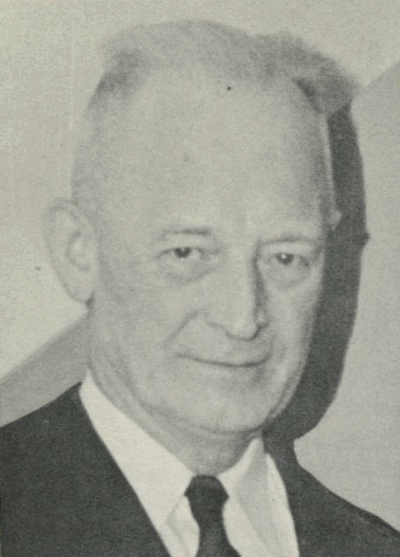
Charles Grant MacNeil
The interview begins with the1938 Blubber Bay strike, and goes on to detail the various unions in the woods prior to creation of the International Woodworkers of America, anti-Oriental sentiment in the labor movement, and the political affiliations of labor leaders. He describes his friendship with J.S. Woodworth in Ottawa which led him to the CCF and political involvement. MacNeil also touches on his role as secretary of the BC Security Commission during Japanese internment.
Later, MacNeil focuses on the power struggle between pro-Communist and anti-Communist factions within the IWA from the late 1930s to the late 1940s.The IWA was founded in 1937 as an industrial union, breaking away from the United Brotherhood of Carpenters and Joiners. This led to a bitter struggle with the Carpenters’ Union. In 1946 when the IWA organized its first industry-wide strike, which laid the foundation for industry-wide bargaining.
Related Resources
The Battle of Blubber Bay B.C., Podcast Ep. 12
A fierce 1938 strike made history when mine workers faced extreme retaliation for organizing with the International Woodworkers of America (IWA). Despite 30 years of wretched working conditions there ...
From Winnipeg’s ‘Most Wanted’ to North Vancouver’s ‘Most Respected’
Under close police surveillance, the 1936 Vancouver May Day parade announcer mocked passing effigies of local white nationalist Tom MacInnes and Mayor Gerry McGeer. “Volunteers to throw Tom and Gerry ...
BC and Western Canadian Lumber Worker Newspaper, 1938-2006
The Lumber Worker collection comprises digitized newspapers from 1938-2006, published by the International Woodworkers of America (IWA), the most prominent forestry union in Western Canada. Visit The ...
Bill Routley Interview: From the Sawmill to the Legislature
Bill Routley was born in 1948 in Chatham, Ontario. He was the son of two ministers who raised him in Duncan, on Vancouver Island. The treatment of employees at a shoe repair business in Victoria kindl...
Charles Howard Webb (1896-1977), Booklet
This booklet chronicles the significant contributions of Charles Howard Webb (1896-1977) to the labour movement in Prince George and the Interior region of British Columbia. Webb began his career as a...
The Union Archive that Almost Didn’t Make It, Podcast Ep. 16
The International Woodworkers of America (IWA) Annex Archive opened in 2019 in Lake Cowichan, BC: home of the first IWA local in the province. It is a proud achievement and crucial repository for the ...