
Magic and Lethal: The Asbestos Memorial
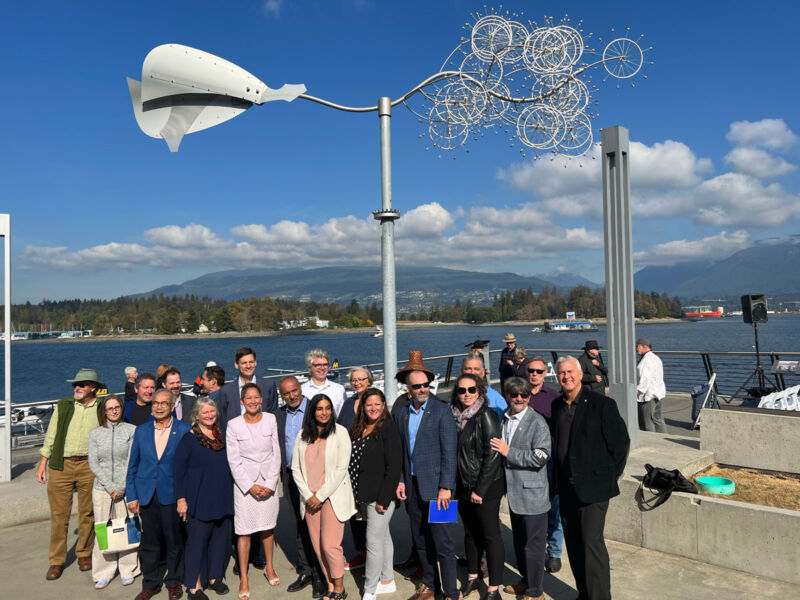
In September 2022, the BC Labour Heritage Centre dedicated Magic and Lethal: The Asbestos Memorial along the Vancouver Convention Centre, 1055 Canada Place. The project was proposed by the BC Insulators’ Union Local 118 in 2018 and initiated by the BC Labour Heritage Centre. It was a partnership with WorkSafeBC, the Province of British Columbia, the BC Pavilion Corporation (PAVCO) and the Vancouver Convention Centre.
[00:00:03.21] – Narrator
Take a look across the inlet, where asbestos was loaded for export. Workers hauled it, breathed it, took it home, later to die from it, by the thousands.
[00:00:20.02] – Doug R. Taylor
It’s actually silky to the touch until you look at it under a microscope, and then it’s barbed and sharp, but unseen without sunlight illuminating. It’s unseen. Thousands of particles of asbestos floating in the air.
[00:00:37.04] – Lee Loftus
I was working in the shipyards. The sun would come through that window. You could see the whole shop, a huge shop, and all you saw was all this stuff just floating in the air.
[00:00:49.12] – Narrator
Asbestos was and is the magic mineral. Floors, walls, ceilings, roofing, oven mitts, hair dryers, crayons, talcum powder. Cheap, plentiful, easy to mine, and lethal to breathe.
[00:01:08.16] – Lee Loftus
As I look across that harbour, that means something to me because Cassiar Asbestos produced asbestos for decades and decades, and they shipped it down to the port across the way here. And you would be able to look at that pier and the pier would be chock-a-block full of asbestos, all in canvas-type bags. Then they would ship it around the world to be used in other applications and expose other workers without advising them what those hazards were. That was the place where I saw a lot of the exposures that were unnecessary.
[00:01:40.23] – Suzana Prpic
Asbestos was deemed to be that magic mineral, and it was meant to change the world. And it did change the world, but for all the wrong reasons. No one thought that in going to work and handling materials and doing their day-to-day jobs would make them sick 20, 30, or 40 years later. People were simply providing for their families and doing their jobs. It’s heartbreaking and it has to stop.
[00:02:09.08] – Narrator
This much was known in 1947: Once in the lungs, asbestos fibres stay there, a time bomb. One exposure can bring on terminal cancer decades later, when there’s nobody left to blame.
[00:02:26.11] – Lee Loftus
This is personal for me. Third-generation asbestos worker. It’s impacted my family, my co-workers. I’ve delivered eulogies, and I’ve helped many people arrange for their last days. That’s not something I planned for when I decided to be a construction worker.
[00:02:43.20] – Narrator
The reckoning has just begun. Asbestos exposure is already the largest on-the-job killer in Canada. More than 150,000 have already been exposed. Canada banned asbestos in 2018. You do the math.
[00:03:03.20] – Craig Lehto
The two words “magic” and “lethal” really describe the legacy of asbestos well. And it really describes the journey that we’ve had collectively with asbestos through the decades.
[00:03:15.04] – Doug R. Taylor
It took many, many years with lots of resistance, you know, different industrial interests burying the information and people continuing to use asbestos and the different societal directions that were required to finally put an end to the use of the asbestos that was harming people, killing people.
[00:03:39.02] – Craig Lehto
The memorial will be many things to different people. For some who have lost family members or relatives or friends, it will cause them to reflect on the tragedy and it will be a true memorial to them. For others who may not have awareness of asbestos or learning about asbestos for the first time, Hopefully it gets them talking about the impacts of asbestos and spreads the awareness around the hazards that it creates. That’s always the start to preventing further illness and disease.
[00:04:12.00] – Lee Loftus
When I saw the wheels and the cups and the movement and all the way it was all set up and the artwork around that, it reminded me of how that asbestos is airborne and how chaotic it is.
[00:04:27.08] – Doug R. Taylor
The spiky asbestos fibers are just a forest of spokes, which this piece is really. The frame that carries all these wheels is like a bronchial pathway. The tail of the piece is the lung-like shapes. All relates to the human body.
[00:04:48.00] – Craig Lehto
The Asbestos Memorial is so important to the convention center and Really, it’s important to the history of BC and the BC workers. With our themed artwork project that we have around the building already, I believe this is a really natural fit to talk about a very poignant moment in our, in our history in BC and a salute to the workers that were exposed to asbestos. I think it fits well and we’re very honoured to host this piece on our facility.
[00:05:14.09] – Suzana Prpic
It’s wonderful to have all these organizations come together to make this memorial a reality. WorkSafeBC is so honoured to be part of this group to really raise awareness. It’s imperative that we take this opportunity and make the positive changes so that we understand this hazard, that we understand the risk it presents, and that we have the controls in place to avoid this devastating loss in the future.
[00:05:44.04] – Lee Loftus
This location is priceless. Everybody comes down here sooner or later. Everybody gets a chance to walk around this plaza, and hopefully they’ll leave here and understand that the solutions are not in place, the answers have not been completely developed, and that asbestos is still a situation and will be for decades to come.
The memorial’s centrepiece is Doug R Taylor’s sculpture, “Wind Wheel Mobile”. Rich in symbolism, it is an iconic reminder of those lost to asbestos exposure and a reminder of the danger that continues. In addition to the artwork, the memorial also includes two plaques, that describe the tragic history of the magic mineral. Also included is a poem by Order of Canada recipient John MacLachlan Gray.
Related Resources
Asbestos: A Lethal Legacy, Podcast Ep. 17
Unions have been fighting since the 1970s for strict regulations in the use of asbestos and decent compensation for those ill and dying from its deadly fibres. People are still getting sick from expos...
Asbestos in BC: A Tragic Legacy, Video, 2015
A deeply personal story is set against a broader historical backdrop of asbestos use and its devastating consequences in Canada. The video implicitly and explicitly touches on a historical narrative t...
Asbestos, Labour Heritage Moment Video
Asbestos is the leading cause of death in today’s workplace. Because diseases such as mesothelioma and asbestosis can take decades to appear, it will continue to be a killer for many more years. This ...
Asbestos: The Silent Killer | Video, 2009
Produced by the United Steelworkers, a full decade before asbestos was banned in Canada, the video “Asbestos: The Silent Killer” discusses the harmful effects of asbestos exposure on worke...
Lee Loftus Interview: Leadership in Unions, Safety, and Climate Action
In this far-reaching conversation, Lee Loftus discusses his experiences as a third-generation insulator, and union member and executive with the Heat and Frost Insulators Union Local 118 in British Co...
Asbestos Case Study, Teaching Materials
Designed for secondary students and union orientation classes, this case study provides a historical perspective on asbestos exposure in British Columbia. Participants are encouraged to consider the o...